Tight Breathing Sounds in Your Baby: Understanding Wheezing and Whistling
Many parents hear whistling or wheezing breathing sounds in their infant and feel unsure. This article explains the most common causes (bronchiolitis, obstructive bronchitis, asthma), when medical help is needed, and what immediate measures parents can take.

Author: Dr. med. univ. Daniel Pehböck, DESA
Specialist in Anesthesiology and Intensive Care Medicine, AHA-certified ACLS/PALS Instructor, Course Director Simulation Tirol
Reading time approx. 9 min
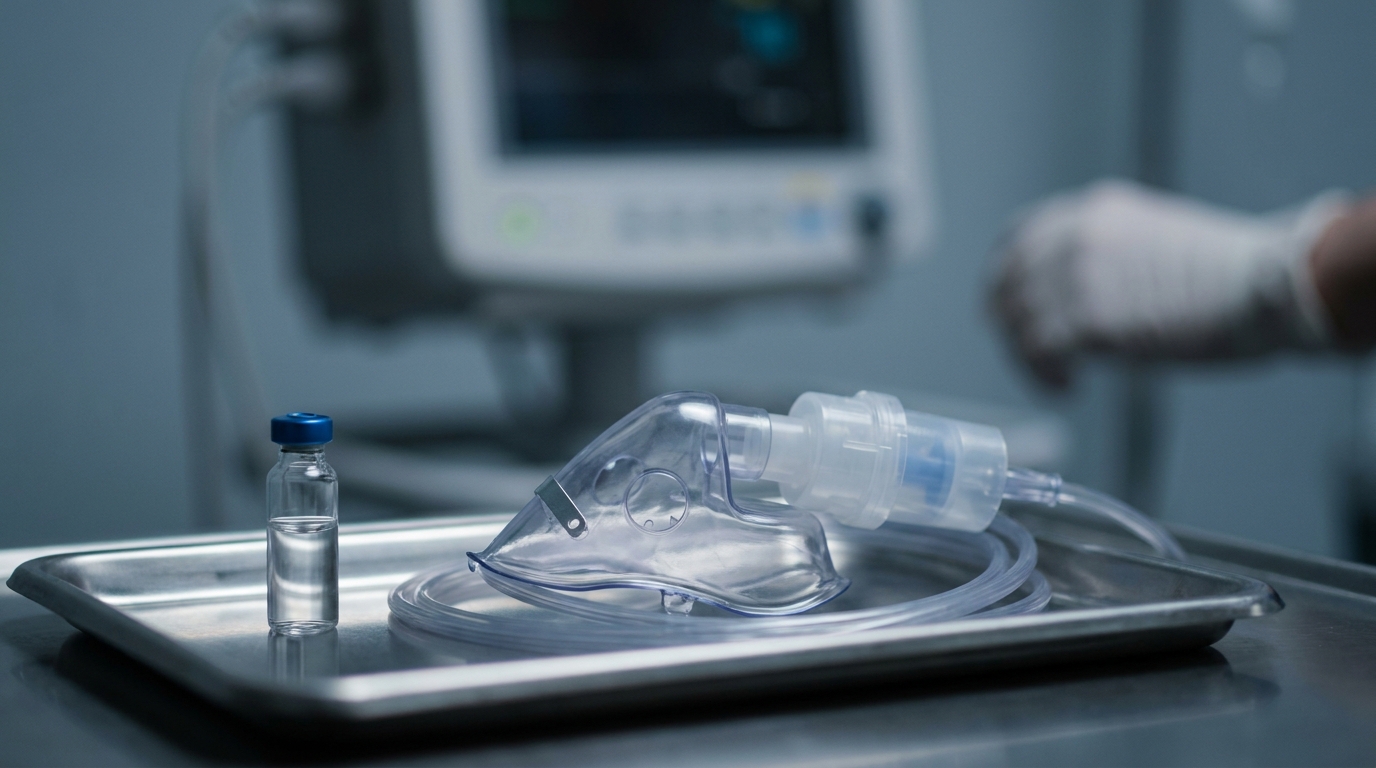
When your baby suddenly whistles, wheezes, or makes a tight, squeaky sound while breathing, it's understandably alarming. Maybe you noticed it during breastfeeding, while your baby was falling asleep, or in the middle of the night. You're wondering: Is this still normal? Or does my child need a doctor right now? This uncertainty is completely understandable – and you're not alone. Whistling or wheezing breathing sounds in infants and toddlers are among the most common reasons parents visit pediatric emergency departments. This article helps you properly assess these sounds, understand the most important causes, and recognize when you need to act immediately.
What Exactly Are Wheezing and Whistling?
Before we dive into the causes, it's helpful to understand what these sounds actually mean. Wheezing and whistling are so-called obstructive breathing sounds – meaning they occur when your baby's airways are narrowed and air has to squeeze through a tighter passage.
Imagine a garden hose: if you half-cover the opening with your thumb, the water stream narrows and a whistling sound is produced. Something very similar happens in your baby's bronchial tubes. The narrowing can have various causes:
- Swelling of the mucous membrane – for example, due to an infection
- Thick mucus partially blocking the airways
- Spasm of the bronchial muscles – the muscles around the airways contract
- External pressure on the airways – for example, from enlarged lymph nodes
Important to know: Babies' airways are naturally very narrow and soft. Even a slight swelling that would barely be noticeable in an adult can produce clearly audible sounds in an infant. This means, on one hand, that wheezing sounds are more common in babies – but also that breathing problems can become dangerous more quickly.
Wheezing, Whistling, Stridor – What's the Difference?
These three terms are often confused, but they describe different things:
- Wheezing: A soft, musical, often multi-tonal sound that is mainly heard during exhalation. It originates in the lower airways (bronchi).
- Whistling: In everyday language, this is often used synonymously with wheezing. It describes a higher-pitched, more monotonal whistling sound during breathing.
- Stridor: A rather harsh, scratchy, or raspy sound that typically occurs during inhalation. It indicates narrowing of the upper airways (larynx, trachea) and has different causes, such as croup.
As a parent, the most important question is not the exact terminology, but: During which phase of breathing does the sound occur? Sounds during inhalation point more toward a problem in the larynx or trachea area. Sounds during exhalation are more suggestive of narrowed bronchial tubes.
The Most Common Causes of Wheezing Breathing Sounds
Bronchiolitis – the Most Common Cause in Babies Under One Year
Bronchiolitis is an inflammation of the smallest airways (bronchioles) and is almost always caused by viruses, most commonly the RS virus (Respiratory Syncytial Virus). It primarily affects babies in their first twelve months of life and occurs more frequently during the cold season.
Typical course:
- Starts like a normal cold: runny nose, mild cough, possibly slight fever
- After two to three days, worsening: cough becomes stronger, breathing becomes harder
- Wheezing and whistling breathing sounds develop
- The baby may drink less well because it's hard to breathe while sucking
- Peak of the illness usually on the third to fifth day, then gradual improvement
Bronchiolitis resolves on its own in most cases. However, in very young babies (under three months), premature infants, or children with pre-existing conditions, it can become dangerous and may require hospitalization.
Obstructive Bronchitis – Recurring Airway Narrowing
Obstructive (meaning narrowing) bronchitis is one of the most common respiratory diseases in toddlers. It is also usually triggered by viral infections but affects the somewhat larger bronchi.
Characteristics:
- Dry, often barking cough
- Clearly audible whistling or humming breathing sounds
- Prolonged exhalation – the baby visibly takes longer to exhale than to inhale
- The child may seem restless or fussy
- Recurrence is typical: some children have an obstructive component with every infection
Many children who experience repeated obstructive bronchitis episodes as babies "grow out of it." As they get older, the airways become wider, more stable, and less susceptible. Only a small proportion actually develops persistent asthma.
Bronchial Asthma – Rather Rare in Infants
A confirmed asthma diagnosis is rarely made in babies and toddlers under two years of age because the typical pulmonary function tests cannot yet be reliably performed at this age. Nevertheless, there are children in whom asthma-typical patterns are already recognizable very early on.
Signs that may point to asthma:
- Recurring wheezing even without an infection
- Wheezing during physical exertion (e.g., vigorous kicking or crying)
- Family history: asthma, atopic dermatitis, or hay fever in parents or siblings
- Improvement after administration of bronchodilator medications (inhalation)
Other Possible Causes
Besides the three most common causes, there are other reasons for wheezing breathing sounds in babies that are rarer but important to know about:
- Foreign body aspiration: Has your baby inhaled a small object, a piece of food, or a small toy part? Sudden onset of coughing and wheezing without a preceding infection is an alarm signal. Especially in children from the crawling age onward who put everything in their mouths.
- Gastroesophageal reflux: Stomach acid that travels up into the esophagus and from there into the airways can cause recurring wheezing – often in combination with frequent spitting up and fussiness after feeding.
- Congenital airway abnormalities: For example, a soft trachea (tracheomalacia) or a soft laryngeal structure (laryngomalacia). These often cause sounds from birth that change in certain positions.
- Allergic reactions: Rare in infancy, but possible – for example, to foods, animal dander, or smoke.
When Do You Need to Go to the Doctor or Hospital Immediately?
Most wheezing breathing sounds in babies are caused by harmless viral infections and resolve on their own. However, there are clear warning signs where you should not wait but act immediately.
Call emergency services (144 in Austria) or go directly to the nearest pediatric emergency department if:
- Your baby develops bluish lips, fingernails, or skin (sign of oxygen deficiency)
- Your baby stops breathing or has very long pauses in breathing (more than 10–15 seconds)
- Your baby is breathing with extreme effort: the skin visibly pulls in between the ribs with each breath (retractions), the nostrils flare, the head is thrown back with each breath
- Your baby is no longer drinking or manages only less than half of the usual amount
- Your baby is noticeably limp, lethargic, or difficult to wake
- Sudden wheezing without signs of infection occurs – suspicion of an aspirated foreign body
See your pediatrician promptly if:
- Wheezing sounds persist for more than two to three days
- Your baby is breathing faster than normal (in infants, more than 50–60 breaths per minute)
- Fever above 38.5°C (101.3°F) develops, especially in babies under three months
- Your baby has fewer wet diapers than usual (sign of dehydration)
- You are unsure – your parental instinct counts
How to Count Your Baby's Respiratory Rate
The respiratory rate is a simple but very informative value. Here's how to do it:
- Wait for a calm moment, ideally when your baby is sleeping or lying relaxed.
- Watch your baby's chest or abdomen.
- Count the breathing movements (one rise AND fall = one breath) for a full 60 seconds.
- Use a clock or the stopwatch on your phone.
Reference values for normal respiratory rate:
- Newborns: 30–50 breaths per minute
- Infants (1–12 months): 25–40 breaths per minute
- Toddlers (1–3 years): 20–30 breaths per minute
Values significantly above these ranges may indicate respiratory distress.
What You Can Do at Home – Immediate Measures for Parents
If your baby has wheezing breathing sounds but none of the alarm signals mentioned above, there are several things you can do to make breathing easier:
Stay Calm
Sounds obvious, but it's essential. Babies sense the tension of their caregivers. If you stay calm, your baby is more likely to stay calm too – and a calm baby breathes more easily than a screaming, agitated baby.
Elevate the Upper Body
Don't lay your baby completely flat; instead, position the upper body slightly elevated. For example, you can place a folded towel under the mattress at the head end (not directly under your baby's head, to avoid suffocation risk). When your baby is awake, you can hold them upright against your shoulder.
Keep the Nose Clear
Babies breathe almost exclusively through their nose during the first months of life. A blocked nose makes breathing even harder. You can:
- Use saline nasal drops (available at the pharmacy)
- Gently remove nasal secretions with a nasal aspirator
- Do not use decongestant nasal drops meant for adults – these are not suitable for babies
Ensure Humid Air
Dry heated air further irritates the mucous membranes. You can:
- Hang damp towels over the radiator
- Use a humidifier
- Briefly take your baby into the bathroom and run warm water (the steam humidifies the air)
Offer Plenty of Fluids
Well-hydrated mucous membranes swell less, and thinner mucus is easier to cough up. Offer your baby the breast or bottle more frequently – smaller amounts but more often.
Ensure a Smoke-Free Environment
Cigarette smoke – including the smoke that clings to clothing, hair, or furniture (so-called "thirdhand smoke") – massively irritates the airways and worsens any respiratory problem. Make sure your baby is in a completely smoke-free environment.
What You Should NOT Do
- Do not use essential oils (eucalyptus, menthol, camphor) in infancy – they can trigger airway spasms
- Do not give cough syrups without consulting a doctor – many are not approved for babies
- Do not try to remove a suspected foreign body yourself unless you can clearly see it in the mouth – if you suspect foreign body aspiration, call emergency services immediately
When Does Wheezing Become an Emergency?
The transition from "harmless" wheezing to life-threatening respiratory distress can happen quickly in babies. That's why it's important to monitor your baby closely during these episodes – including at night.
A particularly deceptive sign: If the wheezing sounds suddenly stop, but your baby is still visibly struggling to breathe, this can mean the airways have become so narrow that almost no air is flowing through. Paradoxically, this is more dangerous than loud wheezing and requires immediate medical help.
In summary, you should act immediately if you see any of the following signs:
- Blue discoloration (lips, tongue, fingernails)
- Silent respiratory distress (visible effort but barely audible breathing sounds)
- Change in consciousness (the baby no longer responds normally to voice or touch)
- Respiratory arrest (no breathing movement visible)
In the worst case – if your baby stops breathing and is no longer responsive – you must begin resuscitation measures until emergency services arrive.
Practical Training
Respiratory emergencies in babies often progress faster and more dramatically than in adults. Knowing the warning signs is the first step – but in a real emergency, what matters is that you can perform the right actions even under stress. In the baby resuscitation course from Simulation Tirol, you learn to recognize respiratory distress in infants early, perform the correct first aid measures for airway obstruction (foreign body aspiration), and initiate resuscitation in the worst-case scenario. You practice on realistic simulation manikins and receive direct feedback from experienced instructors. Because in an emergency, there is no second chance. All information and dates can be found at simulation.tirol/baby-reanimation.
Want to practice this hands-on?
In our Baby-Reanimationskurs you practice this topic hands-on with high-tech simulators and experienced instructors.
More Articles
Respiratory Distress Syndrome in Newborns: Causes and Initial Management
Transient tachypnea, meconium aspiration, and surfactant deficiency – how healthcare professionals and parents can distinguish the most common causes of neonatal respiratory distress and which immediate measures can be lifesaving.
Airway Obstruction in Infants: Back Blows and Chest Thrusts
Detailed lay-rescuer guide for choking emergencies in babies under 1 year: positioning, blow technique, alternating measures, and when to call emergency services.
Baby Not Breathing: Infant CPR for Laypeople
A clear, easy-to-understand guide to cardiopulmonary resuscitation (CPR) for babies under one year of age. This article explains how to check breathing, perform rescue breaths, and give chest compressions with the correct hand position – specifically designed for parents and grandparents with no medical background.