Heat Stroke in Babies: Symptoms and First Aid for Parents
Infants cannot regulate their body temperature well and overheat quickly. This article explains how parents can distinguish heat stroke from fever, what immediate measures help, and when to call emergency services.

Author: Dr. med. univ. Daniel Pehböck, DESA
Specialist in Anesthesiology and Intensive Care Medicine, AHA-certified ACLS/PALS Instructor, Course Director Simulation Tirol
Reading time approx. 10 min
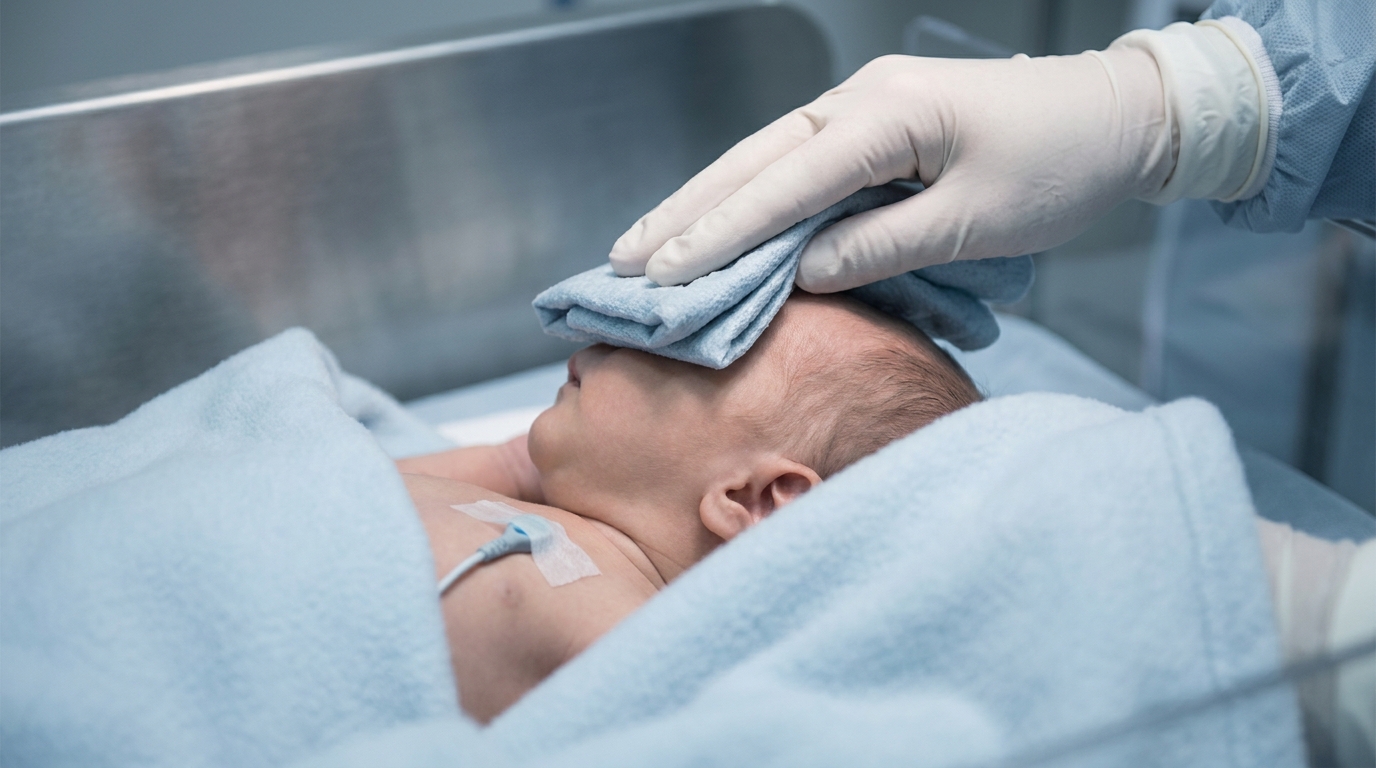
Babies are particularly sensitive to heat – far more sensitive than most parents realize. Their small bodies cannot regulate their own temperature as effectively as an adult's. Their sweat glands are not yet fully functional, their body surface area is much larger relative to their weight, and their fluid balance is thrown off more easily. All of this means that babies can dangerously overheat very quickly – in summer, in an overheated car, or even in a stroller where they're dressed too warmly. In the worst case, heat stroke develops – a life-threatening emergency where you need to act quickly and correctly. This article shows you step by step how to recognize heat stroke, how to distinguish it from fever, and what you can do immediately until help arrives.
Why Babies Overheat So Quickly
To understand why heat stroke is so dangerous in babies, it helps to take a brief look at the unique characteristics of an infant's body:
- Immature temperature regulation: The temperature control center in the brain is not yet fully developed in infants. The body cannot counteract heat as effectively as in older children or adults.
- Less sweat: Babies sweat significantly less. However, sweating is the most important mechanism by which the body releases heat. Without this cooling, body temperature rises rapidly.
- Large surface-area-to-volume ratio: The relatively large skin surface absorbs a particularly large amount of heat in direct sunlight or in overheated environments.
- Low fluid reserves: While the water content in a baby's body is high, the reserves are small. Even minor fluid losses can destabilize the circulation.
- Dependence on caregivers: A baby cannot crawl into the shade on its own, take off clothing, or ask for water. It is completely dependent on you.
Typical Risk Situations
Heat stroke doesn't only happen during scorching summer heat. These situations are particularly dangerous:
- In a parked car: The temperature inside a vehicle rises to life-threatening levels within minutes – even on cloudy days and with a slightly open window. Even at an outside temperature of 20 °C, temperatures inside the car can exceed 45 °C.
- In a stroller covered with a cloth: Many parents drape a cloth over the stroller to provide shade. This is well-intentioned but dangerous: heat builds up under the cloth, and the temperature can rise significantly.
- Dressed too warmly: Multiple layers of clothing, hats in a warm apartment, or thick blankets in summer – all of this can cause a baby to overheat.
- Direct sunlight: Babies under one year old should ideally not be in direct sunlight at all. Their skin is thin, and their body heats up quickly.
- Overheated rooms: Top-floor apartments in summer, rooms without ventilation, or a bedroom with closed windows and shutters can become a heat trap for babies.
Heat Stroke, Sunstroke, Heat Exhaustion – What's the Difference?
These terms are often confused. As a parent, it's important to know the differences because the level of urgency varies:
Heat Exhaustion
Heat exhaustion is a precursor to heat stroke. The body loses too much fluid and salts through sweating. Typical signs in a baby:
- Restlessness, fussiness
- Pale, moist skin
- Increased sweating (if the baby is already able to sweat)
- Increased thirst, eager drinking
- Slightly elevated temperature (up to about 39 °C)
Heat exhaustion can usually be treated effectively with cooling and fluid intake. However, if left untreated, it can progress to heat stroke.
Sunstroke (Insolation)
In sunstroke, the head specifically is overheated by direct sunlight. The meninges become irritated. Typical signs:
- Bright red, hot head with an otherwise rather cool body
- Restlessness, high-pitched screaming
- Vomiting
- Neck stiffness (the baby resists when you try to bend its head forward)
- Body temperature is often only slightly elevated
Sunstroke should be taken seriously and can worsen. When in doubt, always seek medical help.
Heat Stroke – The Emergency
Heat stroke is the most severe form of heat-related illness and a life-threatening emergency. Here, the body's temperature regulation fails completely. Body temperature rises uncontrollably above 40 °C, and without treatment, organ damage, brain damage, or death can occur.
How to Recognize Heat Stroke in a Baby
Babies cannot tell you that they are hot or that they feel unwell. You need to watch for physical signs. The following warning signs indicate heat stroke:
- Very high body temperature: Above 40 °C (measured rectally). This is the cardinal symptom.
- Hot, dry, flushed skin: Unlike heat exhaustion, a baby with heat stroke typically no longer sweats. The skin feels dry and burning hot.
- Altered consciousness: The baby is noticeably drowsy, lethargic, and barely responds to voices or touch. Some babies appear "absent."
- Seizures: Twitching of the arms, legs, or the entire body. A very serious sign.
- Rapid, shallow breathing: The baby breathes noticeably faster than normal or very shallowly.
- Weak, rapid pulse: You can feel the heartbeat at the wrist or at the fontanelle – it is fast and fluttery.
- Sunken fontanelle: The soft spot on top of the head may be sunken due to fluid deficit.
- Vomiting or diarrhea: Both can occur and worsen fluid loss.
- High-pitched, unusual crying – or, conversely, conspicuous silence.
When Is It an Emergency?
Call emergency services immediately (144 in Austria, 112 Europe-wide) if one or more of these signs are present:
- Body temperature above 40 °C
- The baby barely responds or is unresponsive
- Seizures occur
- The skin is hot and dry, the baby is not sweating
- Loss of consciousness
General rule: If you're unsure whether it's heat stroke – it's better to call once too often than once too few. No one will blame you.
Heat Stroke or Fever? How to Tell the Difference
A high body temperature in a baby can have various causes. Fever from an infection and heat stroke may look similar at first glance but require very different responses. Here are the key distinguishing features:
| Fever (Infection) | Heat Stroke | |
|---|---|---|
| Cause | Immune response to viruses, bacteria | External overheating |
| Situation | Independent of ambient temperature | After heat exposure |
| Skin findings | Often changing – sometimes pale, sometimes red, often moist | Hot, dry, flushed |
| Sweating | Common, especially during rising fever | Typically absent |
| Behavior | Sick, whiny, wants to cuddle | Lethargic, barely responsive |
| Accompanying symptoms | Runny nose, cough, ear pain | No signs of infection |
| Response to cooling | Temperature barely drops or rises again | Temperature drops with external cooling |
Rule of thumb: If your baby was exposed to heat (car, direct sunlight, dressed too warmly, overheated room) and shows a high temperature – think of heat stroke first, not fever.
First Aid for Heat Stroke: Step by Step
If you suspect your baby has heat stroke, every minute counts. Here is your action plan:
1. Call Emergency Services
Call for an ambulance immediately (144 or 112). Briefly describe:
- What happened (baby was exposed to heat)
- How old the baby is
- What symptoms you are observing
- Where you are
Stay on the line until the dispatcher ends the call. You will also receive instructions on what to do.
2. Move Out of the Heat
Bring your baby to a cool, shaded location immediately. This could be:
- An air-conditioned room
- A shady spot outdoors
- A cool hallway or basement
3. Remove Clothing
Undress the baby as much as possible. The diaper can stay on, but everything else comes off – every layer traps heat.
4. Actively Cool – But Correctly
Proper cooling is crucial. The right method matters:
- Place lukewarm (not ice-cold!) damp cloths on the forehead, neck, armpits, and groin. Large blood vessels run close to the surface in these areas.
- Gently dab or spray the body with lukewarm water. Evaporation provides cooling.
- Fan air over the baby to enhance the cooling effect of evaporation.
Important – what you should NOT do:
- No ice water, no ice cubes directly on the skin. Extreme cold constricts the blood vessels in the skin and prevents heat from escaping. There is also a risk of cold injury to the baby's delicate skin.
- No cold full bath. The temperature shock can put additional strain on the circulation and, in the worst case, trigger cardiac arrhythmias.
5. Offer Fluids – If the Baby Is Conscious
- If you are breastfeeding: nurse the baby. Breast milk is ideal.
- Formula-fed babies: give the usual formula or boiled, cooled water in small amounts.
- No water for babies under 6 months (unless instructed by a doctor) – breast milk or infant formula is the appropriate fluid.
Never give anything to drink to an unconscious or severely drowsy baby! The baby could choke, and fluid could enter the airways.
6. Monitor the Baby
- Check breathing: Is the chest rising and falling regularly?
- If possible, take the temperature (rectal measurement is the most accurate).
- Speak calmly to your baby, maintain skin-to-skin contact.
7. If the Baby Becomes Unconscious or Stops Breathing
If your baby becomes unresponsive and is not breathing normally, start resuscitation immediately:
- 5 initial rescue breaths (mouth over the baby's mouth and nose, gentle puffs)
- Then 30 chest compressions with two fingers on the breastbone
- Then alternate between 2 rescue breaths and 15 chest compressions
- Continue until the emergency medical team arrives or the baby starts breathing normally again
This sounds frightening – and it is an extreme situation. But if you know these steps and have practiced them, you can save your baby's life.
Prevention Is the Best Protection
The good news: heat stroke can almost always be prevented. These measures will protect your baby:
In Daily Life
- Never leave your baby in the car – not even "just for a minute" and not even with the window open. Always take your baby with you, even if they are sleeping.
- Light, pale-colored clothing in summer. As a rule of thumb: your baby needs at most one layer more than you do.
- Avoid midday heat: Between 11 a.m. and 3 p.m., stay indoors if possible or seek out shady areas.
- Shade the stroller properly: Use a parasol or a special sun canopy instead of a cloth draped over the stroller. This allows air circulation to continue.
- Breastfeed or bottle-feed regularly: In hot weather, your baby needs fluids more frequently. Offer feeds more often than usual.
During Sleep
- Monitor room temperature: The ideal sleeping temperature is 16–18 °C. In summer, ventilate at night and darken the windows during the day.
- Use a light sleep sack instead of a blanket: There are special summer sleep sacks made of thin material.
- Neck test: Regularly feel the back of your baby's neck. If it is hot and moist, the baby is too warm. By the way, a baby's hands and feet are often cool – this is normal and not a good indicator.
In the Car
- Apply sun protection film to the rear side windows.
- Turn on the air conditioning before placing the baby in the car seat. Let the car ventilate briefly first.
- Use reminders: Place your handbag or phone next to the car seat on the back seat – so you don't forget that your baby is in the back. As absurd as it sounds, such cases of forgetting happen even to caring parents, usually when the daily routine changes or during extreme fatigue.
What Happens at the Hospital?
If your baby is taken to the hospital with suspected heat stroke, the following will be done:
- Continuous monitoring of body temperature, heart rate, oxygen saturation, and blood pressure
- Controlled cooling, often with lukewarm compresses or special cooling mats
- Fluids and electrolytes administered via an IV (a small drip into a vein)
- Blood tests to check whether organs such as the kidneys or liver have been damaged
- Monitoring for seizures and neurological abnormalities
Most babies who receive timely treatment make a full recovery. The sooner cooling is started, the better the prognosis.
Key Points to Remember
To conclude, here are the core messages summarized once more:
- Babies overheat quickly – their temperature regulation is still immature.
- Signs of heat stroke: Body temperature above 40 °C, hot and dry skin, lethargy, seizures.
- Act immediately: Call emergency services (144/112) → Move out of the heat → Remove clothing → Cool with lukewarm water → Offer fluids (only if conscious).
- No ice, no ice-cold water – cooling with lukewarm water is safer and more effective.
- When in doubt, always call emergency services. Better to call once too often than once too few.
- Prevention: Never leave in the car, dress appropriately, avoid heat, offer frequent feeds.
Practical Training
Recognizing heat stroke in your own baby and responding correctly requires not only knowledge but also practice – especially when it comes to resuscitation. In the baby resuscitation course from Simulation Tirol, you learn on realistic training manikins how to act calmly and confidently in emergency situations – from heat stroke to choking to respiratory arrest. You practice chest compressions, rescue breathing, and the recovery position for infants under expert guidance until you feel confident. Because in a real emergency, it's not what you know that matters – it's what you can do.
Want to practice this hands-on?
In our Baby-Reanimationskurs you practice this topic hands-on with high-tech simulators and experienced instructors.
More Articles
Respiratory Distress Syndrome in Newborns: Causes and Initial Management
Transient tachypnea, meconium aspiration, and surfactant deficiency – how healthcare professionals and parents can distinguish the most common causes of neonatal respiratory distress and which immediate measures can be lifesaving.
Airway Obstruction in Infants: Back Blows and Chest Thrusts
Detailed lay-rescuer guide for choking emergencies in babies under 1 year: positioning, blow technique, alternating measures, and when to call emergency services.
Baby Not Breathing: Infant CPR for Laypeople
A clear, easy-to-understand guide to cardiopulmonary resuscitation (CPR) for babies under one year of age. This article explains how to check breathing, perform rescue breaths, and give chest compressions with the correct hand position – specifically designed for parents and grandparents with no medical background.