Rocuronium-Sugammadex in Emergencies: Dosing and Reversal
Sugammadex has transformed emergency anesthesia. This article explains dosing, indications, and the time window for reversal of neuromuscular blockade – particularly in cannot-ventilate scenarios following RSI.

Author: Dr. med. univ. Daniel Pehböck, DESA
Specialist in Anesthesiology and Intensive Care Medicine, AHA-certified ACLS/PALS Instructor, Course Director Simulation Tirol
Reading time approx. 8 min
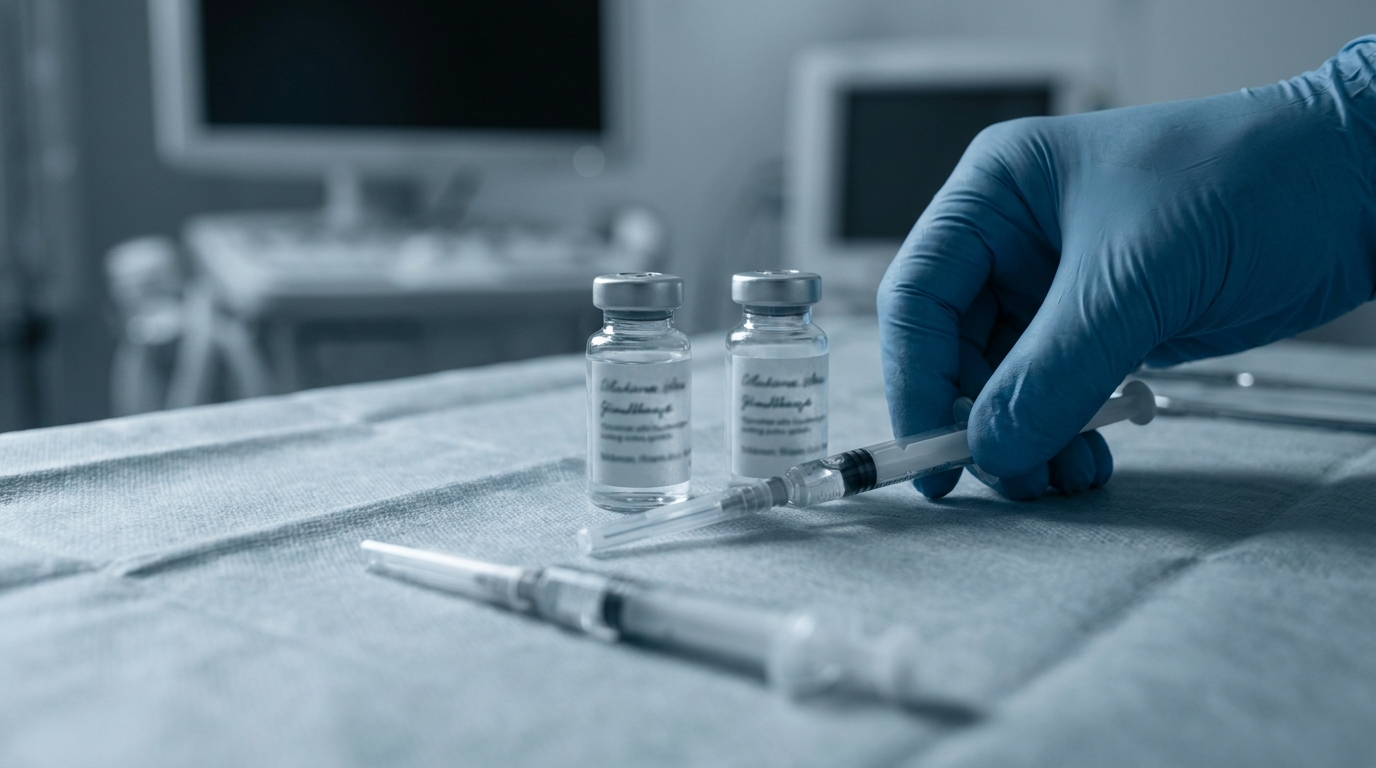
The introduction of sugammadex has fundamentally changed risk management in Rapid Sequence Induction (RSI). For the first time, a drug is available that can completely reverse a deep neuromuscular blockade induced by rocuronium within minutes – a decisive advantage in Cannot-Intubate-Cannot-Ventilate (CICV) scenarios, where restoration of spontaneous breathing can be lifesaving. This article examines the pharmacology, dosing strategies, the clinical time window, and the practical implications of sugammadex in the emergency medicine context.
Pharmacological Fundamentals
Rocuronium: The Muscle Relaxant of Choice for RSI
Rocuronium is a non-depolarizing, aminosteroidal muscle relaxant that acts as a competitive antagonist at the nicotinic acetylcholine receptor of the motor endplate. At the RSI dose of 1.0–1.2 mg/kg body weight, it produces excellent intubation conditions within 60–90 seconds – comparable to succinylcholine, but without its problematic side effect profile (hyperkalemia, malignant hyperthermia, fasciculations, bradycardia).
The clinical duration of action at RSI dosing is approximately 40–70 minutes. Without sugammadex as a reversal agent, this prolonged duration was historically the greatest disadvantage compared to the short-acting succinylcholine: in failed intubation with simultaneous inability to mask ventilate, there was no rapid way out.
Sugammadex: Mechanism of Encapsulation
Sugammadex is a modified γ-cyclodextrin – a ring-shaped oligosaccharide with a lipophilic cavity and a hydrophilic exterior. Its mechanism of action differs fundamentally from classic cholinesterase inhibitors such as neostigmine:
- Encapsulation rather than receptor competition: Sugammadex encloses the rocuronium molecule in a 1:1 ratio within its cavity, forming a highly stable complex. The bound rocuronium can no longer bind to the acetylcholine receptor.
- Concentration gradient: By binding free rocuronium molecules in the plasma, a concentration gradient is created that draws rocuronium away from the neuromuscular endplate back into the plasma.
- No cholinergic side effects: Since sugammadex does not interfere with cholinergic transmission, concomitant atropine administration is unnecessary. Bradycardia, bronchospasm, and excessive secretion – typical problems of neostigmine reversal – do not occur.
The binding is highly specific for aminosteroidal relaxants, with affinity decreasing in the following order: Rocuronium > Vecuronium >> Pancuronium. Sugammadex is ineffective for benzylisoquinolines (atracurium, cisatracurium).
Emergency Dosing
The dosing of sugammadex is guided by the depth of neuromuscular blockade, not by the originally administered rocuronium dose. In emergency medicine, virtually only the highest dosing tier is relevant.
Dosing Regimens by Depth of Blockade
| Clinical Situation | Depth of Blockade | Sugammadex Dose | Expected Reversal Time |
|---|---|---|---|
| Moderate blockade (TOF count ≥ 2) | Moderate | 2 mg/kg BW | approx. 2–3 minutes |
| Deep blockade (PTC 1–2, no TOF) | Deep | 4 mg/kg BW | approx. 3–5 minutes |
| Immediate reversal (emergency) | Immediately after RSI dose | 16 mg/kg BW | approx. 1.5–3 minutes |
The 16 mg/kg Emergency Dose in Detail
The emergency dose of 16 mg/kg body weight is specifically designed for the situation where rocuronium has just been administered at RSI dosing (1.0–1.2 mg/kg) and immediate reversal becomes necessary. Key points:
- Simplify the calculation: For a 70 kg patient, the dose is 1,120 mg. At a concentration of 100 mg/ml, this equals over 11 ml – a significant volume that should be pre-calculated and readily available.
- Rapid administration: The drug is given as an intravenous bolus over a maximum of 10 seconds. Slower injection delays onset of action.
- Weight-based dosing: In obese patients, dosing is based on total body weight (TBW), not ideal body weight (IBW). Underdosing can have fatal consequences.
- Expiration date and storage: Sugammadex is stable at room temperature. Opened vials must be used within 24 hours.
Practical Emergency Dosing Table (16 mg/kg)
| Body Weight | Sugammadex Dose | Volume (100 mg/ml) |
|---|---|---|
| 50 kg | 800 mg | 8 ml |
| 60 kg | 960 mg | 9.6 ml |
| 70 kg | 1,120 mg | 11.2 ml |
| 80 kg | 1,280 mg | 12.8 ml |
| 90 kg | 1,440 mg | 14.4 ml |
| 100 kg | 1,600 mg | 16 ml |
This table should be available – ideally laminated – in the immediate vicinity of emergency equipment.
The Cannot-Intubate-Cannot-Ventilate Scenario
Position of Sugammadex in the Airway Algorithm
The most compelling indication for emergency reversal with sugammadex lies in the CICV scenario. The airway algorithm according to current guidelines typically follows this escalation:
- Plan A: Optimized intubation attempt (maximum 3 + 1 attempts)
- Plan B: Supraglottic airway device (e.g., second-generation laryngeal mask)
- Plan C: Mask ventilation as a fallback
- Plan D: Emergency cricothyrotomy / surgical airway
Sugammadex has its place not as a substitute for the surgical airway, but as a complementary measure considered in parallel with Plan C or at the transition to Plan D. The central consideration is: if the patient can breathe spontaneously after reversal of muscle relaxation, you gain time and avoid an invasive procedure.
Important Limitations
Sugammadex is not a panacea in the CICV scenario, and it would be dangerous to regard it as such:
- Sugammadex only reverses the paralysis, not the anesthesia. The hypnotic and analgesic components of induction (propofol, ketamine, opioids) remain in effect. Spontaneous ventilation is only possible if the respiratory drive is sufficient – which is by no means guaranteed under deep sedation.
- Anatomical obstruction is not affected. In cases of obstructive airway pathology (tumor, swelling, trauma), the return of muscle tone is of little help or may even worsen the situation (laryngospasm, active defense reactions with inadequate depth of anesthesia).
- Time factor: Even 1.5–3 minutes can be too long in a hypoxic situation. When SpO₂ drops below 75% with a falling trend, cricothyrotomy must not be delayed while waiting for sugammadex to take effect.
- Not a substitute for the surgical airway: The decision to perform emergency cricothyrotomy must not be postponed by sugammadex administration. Both measures can and should be performed in parallel.
Neuromuscular Monitoring
Why TOF Monitoring Is Essential
Train-of-Four (TOF) monitoring using a nerve stimulator is the gold standard for assessing neuromuscular blockade. In emergency medicine, it is unfortunately still underutilized, despite providing important information in several situations:
- Before extubation: A TOF ratio ≥ 0.9 confirms adequate recovery of neuromuscular function. Clinical signs (head lift ≥ 5 seconds, hand grip) are less reliable.
- Dose determination: TOF measurement determines whether 2, 4, or 16 mg/kg sugammadex is required.
- Ruling out recurarization: After sugammadex administration, a sustained TOF ratio ≥ 0.9 indicates successful and stable reversal.
Clinical Signs Without TOF Monitoring
In the prehospital setting, a TOF monitor is often unavailable. Assessment must then be made clinically:
- Spontaneous movements of the extremities
- Respiratory excursions and tidal volume
- Head lift for ≥ 5 seconds (most reliable clinical test)
- Tongue protrusion against a spatula
- Adequate cough effort
In an emergency following RSI with immediate 16 mg/kg reversal, however, this differentiated assessment is academic: the question is whether the patient is breathing spontaneously – yes or no.
Special Considerations
Recurarization
Clinically relevant recurarization after adequate sugammadex dosing is extremely rare when used correctly. It may occur with:
- Underdosing – particularly in obese patients when dosing was based on IBW instead of TBW
- Renal insufficiency – the sugammadex-rocuronium complex is renally eliminated; in severe renal impairment (GFR < 30 ml/min) elimination is delayed, but the complex remains stable
- Re-administration of rocuronium – after sugammadex 16 mg/kg, if repeat paralysis is needed, you should switch to benzylisoquinolines (cisatracurium) for at least 24 hours; alternatively, a waiting period of 5 minutes with a significantly increased rocuronium dose (1.2 mg/kg) is possible, although this is problematic in practice and difficult to titrate
Anaphylaxis
Sugammadex can, in rare cases, trigger anaphylactic reactions. The estimated incidence is approximately 1:2,500 to 1:20,000 administrations. Symptoms include skin reactions, bronchospasm, and circulatory depression up to and including shock. In the emergency setting, epinephrine must be immediately available.
An additional pharmacological aspect: the sugammadex-rocuronium complex can itself act as an antigen in rare cases. This so-called cyclodextrin hypersensitivity is distinct from a reaction to free sugammadex and can also occur on first exposure.
Interaction with Hormonal Contraception
Sugammadex binds – albeit with lower affinity – steroid hormones, including progesterone. The clinical consequence: the efficacy of hormonal contraceptives may be impaired after sugammadex administration (especially at higher doses). Patients should be informed that an additional contraceptive method should be used for 7 days. In the emergency context, this information is secondary but must be addressed during documentation and follow-up.
Sugammadex in Special Patient Populations
- Children: Sugammadex is approved for children and adolescents. Dosing recommendations are the same as for adults (2, 4, or 16 mg/kg). Data for neonates and infants under 2 years of age is limited, but use in life-threatening emergencies is justified.
- Pregnant patients: In the context of an emergency cesarean section with a failed airway, sugammadex administration is an important option. Animal studies show no teratogenic effects; controlled studies in pregnant patients are lacking. The maternal indication takes priority in emergency situations.
- Geriatric patients: No fundamental dosing difference, but slowed circulation time may delay onset of action.
- Renal insufficiency: The sugammadex-rocuronium complex is renally eliminated. With GFR < 30 ml/min, sugammadex is not routinely recommended but should still be used in emergency situations. The complex remains stable; only elimination is delayed.
Preparation and Team Communication
Sugammadex as Part of RSI Preparation
Consistent preparation of sugammadex is as essential to RSI as the laryngoscope. The following points should be established as standard practice:
- Pre-calculate the dose: Before every RSI, the sugammadex emergency dose (16 mg/kg) is calculated and verbally communicated.
- Draw up or have ready: In high-risk situations (anticipated difficult airway, pregnancy, children), sugammadex should be drawn up and ready.
- Clear role assignment: A team member is designated for sugammadex administration so that no delay occurs in a CICV scenario.
- Standardized callouts: "Sugammadex 16 mg/kg – [dose in mg] – drawn up and ready" as part of the RSI briefing.
Documentation
The administration of sugammadex and the clinical response must be carefully documented:
- Time of rocuronium administration
- Time of sugammadex administration
- Administered dose and the body weight used for calculation
- Clinical response (time of first spontaneous movement/breathing)
- TOF values, if measured
Summary of Key Points
- Sugammadex 16 mg/kg reverses an RSI dose of rocuronium within 1.5–3 minutes.
- Dosing is based on total body weight.
- Sugammadex is not a substitute for the surgical airway but a complementary measure.
- It only reverses paralysis – not anesthesia. Spontaneous breathing can only be expected if respiratory drive is sufficient.
- Preparation and dose pre-calculation before every RSI are essential.
- TOF monitoring should be used for verification of reversal where available.
- Cricothyrotomy must never be delayed by sugammadex administration.
Practical Training
The pharmacological theory of sugammadex and rocuronium is one thing – confident application under the stress of a CICV scenario is another. In the ACLS course by Simulation Tirol, you train critical decision-making situations in realistic simulations, including airway management, team communication, and structured approaches to emergency anesthesia. The hands-on setting allows you to internalize dosing regimens and algorithms under stress – so that every step is second nature when it matters most.
Want to practice this hands-on?
In our ACLS-Kurs (Advanced Cardiac Life Support) you practice this topic hands-on with high-tech simulators and experienced instructors.
More Articles
Adenosine for SVT: Dosing, Technique, and Pitfalls
Supraventricular tachycardia is one of the most common emergency rhythms. This article describes the correct administration of adenosine using the rapid-flush technique, contraindications in WPW, and documentation of the diagnostic window.
Amiodarone vs. Lidocaine in Ventricular Fibrillation
Comparison of the two antiarrhythmics in shock-refractory ventricular fibrillation and pulseless ventricular tachycardia: dosing, evidence, and recommendations from current AHA guidelines.
Beta-Blocker and Calcium Channel Blocker Toxicity: Management
Overdoses of beta-blockers and calcium channel blockers cause severe bradycardia and shock. Stepwise management with high-dose insulin, lipid emulsion, and catecholamines explained in detail.