Recognizing Serotonin Syndrome: Symptoms and Emergency Management
Serotonin syndrome is a potentially life-threatening drug reaction that is frequently overlooked in the emergency setting. This article covers the Hunter Criteria, differential diagnosis from malignant hyperthermia, and stepwise emergency management with cyproheptadine and supportive measures.

Author: Dr. med. univ. Daniel Pehböck, DESA
Specialist in Anesthesiology and Intensive Care Medicine, AHA-certified ACLS/PALS Instructor, Course Director Simulation Tirol
Reading time approx. 8 min
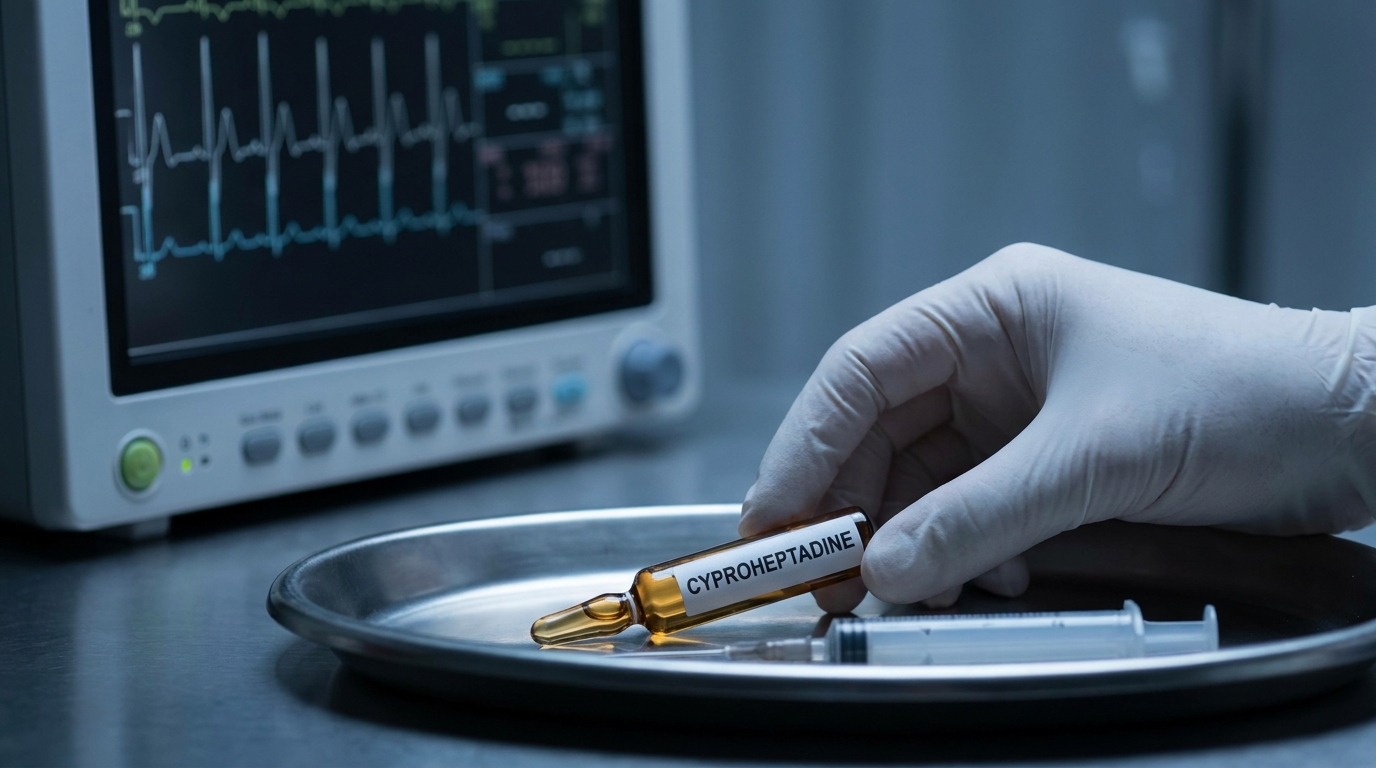
Serotonin syndrome is one of those emergency situations that is regularly underestimated or misdiagnosed in clinical practice. The spectrum ranges from mild symptoms such as tremor and hyperreflexia to life-threatening conditions with hyperthermia, seizures, and multi-organ failure. Given that the prevalence of serotonergic medications in the population remains consistently high – from SSRIs to tramadol to MAO inhibitors – every emergency physician should be confident in applying the diagnostic criteria and be able to execute emergency management without hesitation. Adding to the challenge, the symptoms can mimic those of malignant hyperthermia or neuroleptic malignant syndrome, making a thorough differential diagnosis essential.
Pathophysiology: Why Too Much Serotonin Becomes Dangerous
Serotonin (5-hydroxytryptamine, 5-HT) is a neurotransmitter that regulates numerous functions in both the central and peripheral nervous system: mood, thermoregulation, muscle tone, gastrointestinal motility, and platelet activation. Serotonin syndrome results from excessive serotonergic stimulation, predominantly at the postsynaptic 5-HT₁A and 5-HT₂A receptors in the brainstem and spinal cord.
The pathophysiological cascade can be simplified as follows:
- Increased serotonin synthesis (e.g., through L-tryptophan)
- Increased serotonin release (e.g., through amphetamines, MDMA, tramadol)
- Reuptake inhibition (e.g., SSRIs, SNRIs, tricyclic antidepressants, St. John's wort)
- Inhibition of degradation (MAO inhibitors – both irreversible such as tranylcypromine and reversible such as moclobemide)
- Direct receptor agonism (e.g., triptans, buspirone, LSD, fentanyl)
The key point is: Serotonin syndrome is almost always a pharmacodynamic interaction – it typically occurs with the combination of two or more serotonergic substances, although in rare cases it can also develop under monotherapy with dose escalation or in ultrarapid CYP2D6 metabolizers.
Overview of Causative Substances
For emergency medicine practice, it is essential to know the most common triggers. The following list is not exhaustive but covers the most clinically relevant substance classes:
Common Triggers
- SSRIs: Sertraline, citalopram, escitalopram, fluoxetine, paroxetine, fluvoxamine
- SNRIs: Venlafaxine, duloxetine
- MAO inhibitors: Tranylcypromine, moclobemide, selegiline, linezolid (often overlooked!), methylene blue in higher doses
- Tricyclic antidepressants: Clomipramine (strongest serotonergic potential), amitriptyline, imipramine
- Opioids: Tramadol (most common opioid-related trigger), fentanyl, pethidine, methadone, tapentadol
- Others: Triptans, lithium, ondansetron, dextromethorphan, St. John's wort, MDMA, cocaine
Particularly Treacherous Combinations
The most dangerous interactions occur with the combination of an MAO inhibitor and a serotonin reuptake inhibitor. However, the routine administration of fentanyl or tramadol to patients on SSRI therapy – an everyday occurrence in emergency medicine – can also trigger serotonin syndrome. Similarly, linezolid as an antibiotic is often not recognized as an MAO inhibitor – a classic pitfall in the intensive care unit.
Clinical Symptoms: The Classic Triad
The symptoms of serotonin syndrome typically develop within minutes to hours after ingestion or dose change of the causative substance. In over 60% of cases, symptoms appear within the first six hours. The classic symptom triad comprises:
1. Neuromuscular Hyperactivity
- Tremor (often of the hands, coarse)
- Myoclonus (spontaneous or inducible)
- Hyperreflexia (especially in the lower extremities)
- Clonus (inducible > spontaneous > ocular)
- Rigidity (in severe forms, especially of the lower extremities)
2. Autonomic Instability
- Tachycardia
- Hypertension (rarely hypotension in severe cases)
- Hyperthermia (> 38 °C, in severe cases > 41 °C)
- Diaphoresis (profuse sweating)
- Mydriasis
- Diarrhea, hyperactive bowel sounds
3. Altered Mental Status
- Agitation
- Confusion
- Delirium
- In severe cases: coma
Important: The severity is dose-dependent and ranges from mild symptoms (tremor + hyperreflexia) to fulminant courses with hyperthermia > 41 °C, generalized clonus, rhabdomyolysis, disseminated intravascular coagulation (DIC), and multi-organ failure.
Diagnosis: The Hunter Criteria
The diagnosis of serotonin syndrome is a clinical diagnosis – there is no specific laboratory test. The Hunter Criteria (Hunter Serotonin Toxicity Criteria) have largely replaced the older Sternbach Criteria, as they demonstrate higher sensitivity (84%) and specificity (97%).
Prerequisite
The patient must have been exposed to a serotonergic agent. Then it is assessed whether at least one of the following criteria is met:
- Spontaneous clonus
- Inducible clonus AND (agitation OR diaphoresis)
- Ocular clonus AND (agitation OR diaphoresis)
- Tremor AND hyperreflexia
- Rigidity AND temperature > 38 °C AND (ocular clonus OR inducible clonus)
The Hunter Criteria emphasize the central role of clonus as the cardinal symptom. In particular, inducible clonus at the ankles is an early and sensitive sign. Ocular clonus (slow, continuous horizontal eye movements) is frequently overlooked but is highly specific.
Practical Tip
In any unclear presentation with agitation and tachycardia, check the patient's medication list for serotonergic substances. A targeted elicitation of the Achilles tendon reflex with assessment for sustained clonus (> 3 beats) takes seconds and can confirm the diagnosis.
Differential Diagnosis: Distinguishing from Similar Syndromes
Differentiation from other hyperkinetic-hyperthermic syndromes is critical for correct treatment:
Serotonin Syndrome vs. Neuroleptic Malignant Syndrome (NMS)
| Feature | Serotonin Syndrome | NMS |
|---|---|---|
| Onset | Acute (hours) | Insidious (days to weeks) |
| Trigger | Serotonergic substances | Dopamine antagonists (neuroleptics) |
| Muscle tone | Clonus, hyperreflexia | Lead-pipe rigidity |
| Reflexes | Increased | Normal to decreased |
| Pupils | Mydriasis | Normal |
| Bowel sounds | Hyperactive | Decreased |
| CK | Mildly to moderately elevated | Markedly elevated (often > 10,000 U/L) |
| Course | Rapid improvement after discontinuation | Slow improvement over days |
Serotonin Syndrome vs. Malignant Hyperthermia
Malignant hyperthermia occurs exclusively in the context of volatile anesthetics and/or succinylcholine. Rigidity is generalized and massive, while clonus is typically absent. CK levels are excessively elevated. Treatment is with dantrolene – a medication that is not indicated in serotonin syndrome.
Further Differential Diagnoses
- Anticholinergic syndrome: Dry skin (no sweating!), urinary retention, absence of clonus
- Sympathomimetic toxicity: Similar presentation, but clonus/hyperreflexia is not a prominent feature
- Thyroid storm: Goiter, atrial fibrillation, exophthalmos
- CNS infections: Meningismus, fever, possible skin manifestations
- Status epilepticus: Seizure history, EEG findings
Emergency Management: Stepwise Approach
The management of serotonin syndrome follows a clear algorithm and is guided by severity:
Step 1: Immediately Discontinue the Causative Agent(s)
This is the single most important intervention. In mild cases, discontinuation alone leads to symptom resolution within 24 hours. For substances with long half-lives (fluoxetine: half-life up to 6 days for the active metabolite norfluoxetine), the course may be prolonged.
Step 2: Supportive Therapy
- Monitoring: Continuous ECG, SpO₂, temperature, frequent vital signs
- Fluid resuscitation: Generous crystalloid infusion (Ringer's lactate or balanced electrolyte solution)
- Cooling: For hyperthermia > 39 °C, aggressive external cooling (ice packs to groin and axillae, evaporative cooling). Antipyretics (acetaminophen, NSAIDs) are ineffective, as the hyperthermia is not cytokine-mediated but caused by muscular hyperactivity
- Agitation/seizures: Benzodiazepines are the first-line agents – diazepam 5–10 mg IV or midazolam 2–5 mg IV, titrated to effect. Benzodiazepines simultaneously reduce muscular hyperactivity and thus heat production
Step 3: Specific Therapy with Cyproheptadine
Cyproheptadine (Peritol®) is a 5-HT₂A receptor antagonist with additional antihistaminic properties and is considered the specific antidote for serotonin syndrome. It is available exclusively as an oral/enteral formulation (tablets or as a suspension via nasogastric tube).
Dosing:
- Initial dose: 12 mg orally or via nasogastric tube
- Maintenance dose: 2 mg every 2 hours as long as symptoms persist
- Maximum dose: 32 mg in 24 hours
The evidence for cyproheptadine comes primarily from case series and animal models – randomized controlled trials are lacking. Nevertheless, most toxicology societies recommend its use in moderate to severe serotonin syndrome.
Caution: Cyproheptadine has sedating and anticholinergic side effects. In patients with decreased level of consciousness without a secured airway, administration via nasogastric tube must be performed with appropriate protective measures.
Step 4: Management of Severe Hyperthermia
For temperatures > 41 °C, immediate and aggressive intervention is required:
- Intubation and mechanical ventilation when conservative measures fail
- Neuromuscular blockade with nondepolarizing muscle relaxants (e.g., rocuronium 1 mg/kg IV) to terminate muscular hyperactivity and heat production
- Avoid succinylcholine – it can trigger lethal hyperkalemia in the setting of concomitant rhabdomyolysis
- Intensive cooling with all available means (intravascular cooling, cold IV fluids, ice baths)
- Monitor for complications: Rhabdomyolysis (CK, myoglobin), DIC (coagulation panel), renal failure (creatinine, electrolytes, urine output), metabolic acidosis (ABG)
Summary of the Treatment Algorithm
| Severity | Symptoms | Treatment |
|---|---|---|
| Mild | Tremor, hyperreflexia, mild agitation | Discontinue causative agent, observation, consider benzodiazepines |
| Moderate | Clonus, tachycardia, hypertension, temperature 38–39 °C | Discontinue causative agent, benzodiazepines, cyproheptadine, cooling |
| Severe | Temperature > 41 °C, rigidity, decreased consciousness, impending organ damage | Intensive care, intubation, neuromuscular blockade, aggressive cooling, cyproheptadine |
Prognosis and Clinical Course
The good news: With timely diagnosis and consistent management, serotonin syndrome has a low mortality rate. Most mild to moderate cases resolve within 24–72 hours after discontinuation of the causative substance. However, mortality increases dramatically with delayed diagnosis, particularly when hyperthermia remains untreated and rhabdomyolysis with consequent renal failure and DIC develops.
After resolution of symptoms, a thorough medication history review and adjustment must be performed. Re-exposure to serotonergic substances is generally possible but requires an individual risk-benefit assessment and close monitoring.
Pitfalls in Clinical Practice
Finally, here are some common sources of error that you should avoid in everyday clinical practice:
- Omitting the medication history: Always actively ask about antidepressants, analgesics (especially tramadol), triptans, and herbal preparations (St. John's wort)
- Misdiagnosis as NMS or sepsis: The acute onset and presence of clonus/hyperreflexia point toward serotonin syndrome
- Administration of antipyretics: Acetaminophen and NSAIDs are ineffective for hyperthermia caused by muscular hyperactivity
- Forgetting linezolid and methylene blue as triggers: Both substances possess relevant MAO-inhibiting activity
- Being too conservative with benzodiazepine dosing: In moderate to severe cases, adequate doses are critical for reducing agitation and muscular hyperactivity
Practical Training
Serotonin syndrome is a prime example of how a rare but potentially lethal emergency situation can be managed through a systematic approach – provided you recognize it early and know what to do. In the Emergency Physician Refresher Course by Simulation Tirol, you train exactly these critical decision-making situations in realistic simulation scenarios: from correct differential diagnosis to pharmacological emergency management to structured team management in escalating situations. Hands-on simulation is the most effective way to act confidently and algorithm-based when it truly matters.
More Articles
Recognizing Agonal Breathing: How to Correctly Interpret Gasping
Agonal breathing is frequently misinterpreted as normal breathing, delaying the start of resuscitation. This article explains its characteristics, how to differentiate it from physiological breathing, and the consequences for first responders and healthcare professionals.
Acute Dyspnea: Differential Diagnosis and Immediate Management
Dyspnea has numerous causes ranging from asthma to heart failure to pulmonary embolism. This article presents a systematic approach to differentiation based on history, clinical examination, auscultation, and point-of-care diagnostics.
Acute Hypoglycemia: Emergency Management in Adults and Children
Threshold values, symptom recognition, oral glucose vs. IV dextrose vs. glucagon – with separate dosing for adult and pediatric patients. A common emergency presentation systematically reviewed.