Suicide Attempt by Drug Ingestion: Emergency Management
Common substances in intentional drug overdose, initial stabilization using ABCDE, antidotes, and psychiatric aspects of acute care. A clinically relevant topic that is often underrepresented in emergency physician training.

Author: Dr. med. univ. Daniel Pehböck, DESA
Specialist in Anesthesiology and Intensive Care Medicine, AHA-certified ACLS/PALS Instructor, Course Director Simulation Tirol
Reading time approx. 9 min
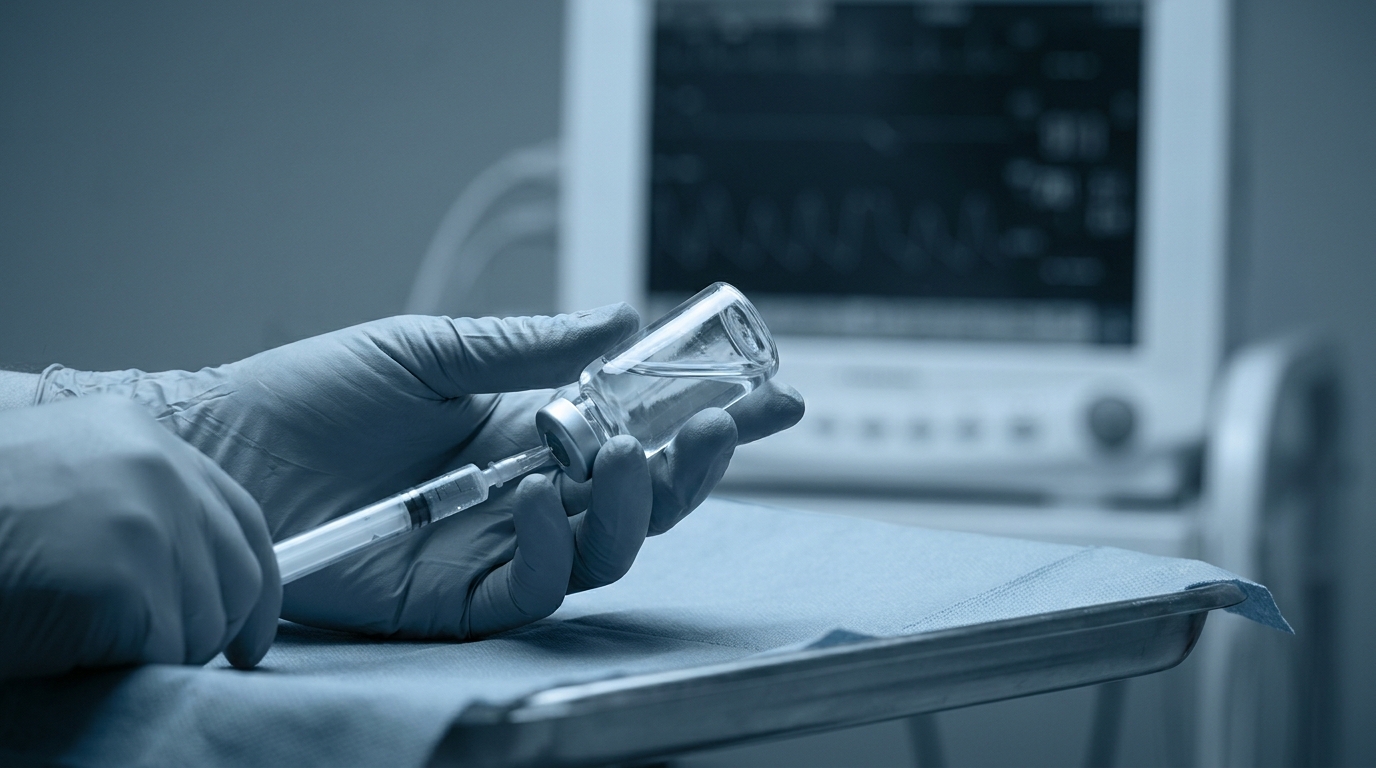
Suicide attempts by drug ingestion are among the most common indications for emergency physician deployment – and at the same time among the most clinically challenging scenarios. The spectrum ranges from the harmless ingestion of a few tablets to life-threatening polyintoxication with multi-organ failure. The key is a systematic approach that consistently prioritizes somatic stabilization using the ABCDE framework, knows substance-specific antidotes, and simultaneously does not lose sight of the psychiatric dimension. This article provides you with a structured overview of the most important substance groups, their toxidromes, initial management, and the most common pitfalls.
Overview of the Most Common Substances
Substance choice in suicidal intoxications generally follows availability. In Central Europe, medications that are stocked in households or easily accessible via prescriptions therefore predominate. An overview of the most clinically relevant groups:
Analgesics
- Paracetamol (Acetaminophen): One of the most common agents in suicidal ingestion. Insidious because patients are often initially asymptomatic and the hepatotoxic effect only becomes clinically manifest after 24–72 hours. Significant liver toxicity can be expected from doses as low as 150 mg/kg body weight.
- NSAIDs (Ibuprofen, Diclofenac): Usually less dangerous in typical overdose, but nephrotoxic in massive doses and associated with gastrointestinal bleeding.
- Opioids (Tramadol, Codeine, Fentanyl patches): Lead to the classic triad of unconsciousness, respiratory depression, and miosis in a dose-dependent manner.
Psychotropic Medications
- Benzodiazepines: Remarkably safe substances in isolation (wide therapeutic index), but rapidly life-threatening in combination with alcohol or opioids due to additive respiratory depression.
- Tricyclic Antidepressants (TCAs): Amitriptyline, doxepin, and others are among the most dangerous substances in overdose. Sodium channel blockade leads to QRS widening, ventricular arrhythmias, and refractory hypotension. Anticholinergic effects cause tachycardia, mydriasis, urinary retention, and seizures.
- Newer Antidepressants (SSRIs, SNRIs): Comparatively safer in mono-intoxication, but with serotonin syndrome potential at high doses, especially in combinations. Venlafaxine holds a special position among SNRIs – it can cause QTc prolongation and seizures.
- Antipsychotics: Quetiapine in overdose leads to pronounced sedation, hypotension, and QTc prolongation. Olanzapine primarily causes somnolence and metabolic derangements.
- Lithium: Narrow therapeutic index. Acute overdose leads to gastrointestinal symptoms, tremor, seizures, and eventually renal failure.
Cardiovascular Medications
- Beta-blockers: Bradycardia, hypotension, hypoglycemia. Propranolol is particularly dangerous (additional sodium channel blockade, seizures).
- Calcium channel blockers: Severe vasodilation, bradycardia (verapamil, diltiazem) or reflex tachycardia (dihydropyridines), cardiogenic shock.
- Cardiac glycosides: Rare but highly dangerous. Nausea, visual disturbances, virtually any arrhythmia possible.
Other Relevant Substances
- Insulin: Severe, prolonged hypoglycemia – often persisting for hours and recurring, especially with long-acting insulin.
- Antiepileptics (Carbamazepine, Valproate): Decreased consciousness, seizures (paradoxically with carbamazepine), hepatotoxicity.
- Alcohol as co-ingestion: In a significant proportion of cases, alcohol is involved as a co-substance, which potentiates the toxicity of virtually all the substances mentioned above.
Initial Stabilization Using ABCDE
The ABCDE approach also forms the foundation of initial management in suicidal intoxication. There is no intoxication where you can skip the ABCDE approach – not even if the ingested substance seems "harmless" to you.
A – Airway
- Patients with decreased consciousness are at risk of aspiration. Securing the airway has absolute priority.
- Check protective reflexes: Are swallowing and cough reflexes present?
- If protective reflexes are absent: Consider early endotracheal intubation (RSI). In intoxications, difficult laryngoscopy due to trismus (TCAs, anticonvulsants) or hypersalivation should be anticipated.
- Suction vomitus from the oropharynx; recovery position if reflexes are intact and spontaneous breathing is adequate.
B – Breathing
- Respiratory depression is the immediately life-threatening problem in opioid, benzodiazepine, and barbiturate intoxications.
- Monitoring: Respiratory rate, SpO₂, capnography (etCO₂).
- Oxygen administration for hypoxia, assisted or controlled ventilation for inadequate spontaneous breathing.
- Be aware of pulmonary edema in severe opioid intoxication or aspiration.
C – Circulation
- Large-bore IV access; two lines in hemodynamic instability.
- 12-lead ECG as early as possible: QRS width (TCAs!), QTc interval (antipsychotics, SSRIs, venlafaxine), arrhythmias (digitalis, beta-blockers, calcium channel blockers).
- Hypotension: Volume resuscitation as first-line. For persistent hypotension, proceed with substance-specific management (norepinephrine as the vasopressor of choice in most intoxications).
- Bradycardia: Atropine, consider pacing (beta-blockers, calcium channel blockers, digitalis).
- Check blood glucose – mandatory in any unexplained decreased consciousness.
D – Disability
- Document GCS, assess pupil size and reactivity.
- Pupil findings as diagnostic clues:
- Miosis: Opioids, cholinergics
- Mydriasis: TCAs, sympathomimetics, anticholinergics
- Seizures: Benzodiazepines are first-line (midazolam IV/IN/IM, diazepam IV/rectal). Phenytoin is contraindicated in intoxication-related seizures – especially in TCA intoxication.
- Body temperature: Hypothermia (barbiturates, ethanol) or hyperthermia (serotonin syndrome, anticholinergic syndrome, sympathomimetics)?
E – Exposure/Environment
- Complete undressing: Search for and remove transdermal patches (fentanyl!).
- Identify injection sites (insulin!).
- Secure the scene: Collect medication packaging, suicide notes, empty blister packs and bring them to the hospital – they provide essential information for substance identification and dose estimation.
Recognizing Toxidromes
Assigning a toxidrome significantly accelerates clinical decision-making, even when the ingested substance is still unknown:
| Toxidrome | Pupils | HR | BP | Temperature | Additional Signs |
|---|---|---|---|---|---|
| Anticholinergic | Mydriasis | ↑ | ↑/→ | ↑ | Dry skin, urinary retention, delirium, "blind as a bat, dry as a bone, red as a beet, mad as a hatter" |
| Cholinergic | Miosis | ↓/→ | ↓/→ | → | Hypersalivation, bronchorrhea, diarrhea, diaphoresis (SLUDGE) |
| Sympathomimetic | Mydriasis | ↑ | ↑ | ↑ | Diaphoresis, agitation, tremor |
| Opioid | Miosis | ↓ | ↓ | ↓ | Respiratory depression, unconsciousness |
| Sedative-hypnotic | →/Miosis | ↓ | ↓ | ↓ | Decreased consciousness, hyporeflexia |
| Serotonergic | Mydriasis | ↑ | ↑ | ↑ | Clonus (especially lower extremities), hyperreflexia, agitation, diarrhea |
Specific Antidotes and Therapeutic Measures
Not every intoxication has a specific antidote – but when one is available, it can be lifesaving:
Substance-Specific Antidotes
- Paracetamol → N-Acetylcysteine (NAC): As early as possible, ideally within 8 hours of ingestion. IV dosing: 150 mg/kg over 1 hour, then 50 mg/kg over 4 hours, then 100 mg/kg over 16 hours (modified protocols exist). NAC is still effective even when given late and should always be administered when in doubt.
- Opioids → Naloxone: Initially 0.04–0.4 mg IV, titrated until adequate spontaneous breathing is achieved. Caution: The half-life of naloxone (30–90 minutes) is shorter than that of most opioids – rebound respiratory depression is the rule, not the exception. Consider a naloxone infusion or repeated bolus doses as needed.
- Benzodiazepines → Flumazenil: Use with great caution. In chronic benzodiazepine use or mixed intoxication with proconvulsant substances (TCAs!), there is a high risk of seizures. In prehospital emergency medicine, flumazenil is contraindicated in most cases of suicidal intoxication.
- TCAs → Sodium Bicarbonate: For QRS widening >120 ms: Sodium bicarbonate 8.4% as a bolus (1–2 mmol/kg IV), target pH 7.45–7.55. Repeat if QRS widening persists. Sodium bicarbonate overcomes the sodium channel blockade and is the most important therapeutic intervention in severe TCA intoxication.
- Beta-blockers → Glucagon: 5–10 mg IV as a bolus, followed by 1–5 mg/h as an infusion. High-dose insulin euglycemic therapy (HIE) as second-line (1 U/kg bolus, then 0.5–1 U/kg/h with glucose and potassium supplementation).
- Calcium channel blockers → Calcium + HIE: Calcium gluconate 10% (30 ml IV) or calcium chloride 10% (10 ml IV). High-dose insulin euglycemic therapy is often more effective than catecholamines here.
- Cardiac glycosides → Digoxin-specific antibody fragments (Fab fragments): Indicated for life-threatening arrhythmias or hyperkalemia >5.5 mmol/L.
- Insulin → Glucose: Continuous glucose infusion (D10% or D20%), close blood glucose monitoring for at least 24 hours. Hypoglycemia can recur over many hours.
Decontamination
Gastric lavage has largely lost its role in modern toxicology. Activated charcoal (1 g/kg body weight, maximum 50 g) is indicated when:
- Ingestion occurred less than 1 hour ago
- The ingested substance binds to activated charcoal (not effective for lithium, iron, alcohols, acids/alkalis)
- The airway is secured or definitively patent
- There is no vomiting and no contraindication
In practice, the time window for activated charcoal is rarely met in the prehospital setting. When in doubt: somatic stabilization before decontamination.
Psychiatric Aspects of Acute Care
The psychiatric dimension of care begins at the scene – not just in the hospital.
Communication with the Patient
- An empathetic, non-judgmental attitude is essential. Statements like "You didn't really mean it" or "Others have it worse" are counterproductive and harmful.
- Ask open questions: "What happened?", "What did you take?", "When did you take the tablets?" The answers are clinically relevant for substance identification and time estimation.
- Many patients are ambivalent – they called the emergency services themselves or left the door open. This ambivalence is not a reason to downplay the seriousness of the suicide attempt.
Legal Framework in Austria
- Patients after a suicide attempt may refuse treatment, provided they have decision-making capacity. However, decision-making capacity is frequently impaired in intoxication (decreased consciousness, substance effects).
- When there is a risk of self-harm or harm to others and decision-making capacity is impaired, treatment and transport against the patient's expressed wishes are legally justified.
- After somatic stabilization, a psychiatric assessment is mandatory. Involuntary commitment under the Involuntary Commitment Act (Unterbringungsgesetz, UbG) may be necessary.
Don't Forget Scene Safety
- Suicidal patients can become aggressive, especially under the influence of disinhibiting substances (alcohol, paradoxical benzodiazepine reaction, anticholinergics).
- Secure the scene: Are there weapons, dangerous objects, aggressive relatives?
- With uncooperative or aggressive patients: Request police assistance, do not proceed alone.
Common Pitfalls
- Underestimating paracetamol: The patient appears completely unremarkable initially. Without NAC administration within the time window, fulminant hepatic failure can result. When in doubt, always have paracetamol levels measured.
- Not considering mixed intoxication: The reality is that the majority of suicidal intoxications are polysubstance ingestions. Never rely on the report of a single substance.
- Flumazenil in mixed intoxication: Uncritical administration of flumazenil in suspected benzodiazepine intoxication can trigger lethal seizures if TCAs were co-ingested.
- Premature discharge from monitoring: Extended-release formulations (e.g., venlafaxine XR, metoprolol XR) can become clinically relevant with a delay. The same applies to paracetamol and insulin.
- Tunnel vision on toxicology: The psychological crisis that led to the suicide attempt persists. Purely somatic care without psychiatric follow-up is incomplete.
- Information loss at handover: Empty blister packs, medication packaging, and information from relatives must be documented and handed over to the hospital. This information is alarmingly often lost during handover.
Summary of Key Principles
- ABCDE first – somatic stabilization takes priority over everything else.
- Recognize the toxidrome – even without knowing the exact substance, the clinical examination provides critical clues.
- Early 12-lead ECG – QRS widening and QTc prolongation are findings with direct therapeutic implications.
- Use antidotes strategically – NAC for paracetamol, naloxone for opioids, sodium bicarbonate for TCAs, calcium and HIE for calcium channel blockers.
- Flumazenil with extreme caution – usually contraindicated in suicidal intoxication.
- Bring blister packs and packaging – information is therapy.
- Ensure psychiatric follow-up – the psychological crisis does not end with somatic stabilization.
- Maintain scene safety – secure the scene, request backup.
Practical Training
The structured management of suicidal intoxications requires not only theoretical knowledge but also practical training – from the ABCDE assessment to antidote administration to clinical decision-making under stress. In the Emergency Physician Refresher Course by Simulation Tirol, you can work through these scenarios in realistic simulations, reflect on your approach, and strengthen your confidence for real-world deployments together with experienced instructors.
More Articles
Recognizing Agonal Breathing: How to Correctly Interpret Gasping
Agonal breathing is frequently misinterpreted as normal breathing, delaying the start of resuscitation. This article explains its characteristics, how to differentiate it from physiological breathing, and the consequences for first responders and healthcare professionals.
Acute Dyspnea: Differential Diagnosis and Immediate Management
Dyspnea has numerous causes ranging from asthma to heart failure to pulmonary embolism. This article presents a systematic approach to differentiation based on history, clinical examination, auscultation, and point-of-care diagnostics.
Acute Hypoglycemia: Emergency Management in Adults and Children
Threshold values, symptom recognition, oral glucose vs. IV dextrose vs. glucagon – with separate dosing for adult and pediatric patients. A common emergency presentation systematically reviewed.