Thyroid Storm: Recognition and Emergency Management
Thyroid storm is a life-threatening emergency with high mortality. This article covers diagnosis based on the Burch-Wartofsky Score, stepwise therapy with antithyroid drugs, beta-blockers, corticosteroids, and Lugol's solution, as well as differential diagnoses such as sepsis and malignant hyperthermia.

Author: Dr. med. univ. Daniel Pehböck, DESA
Specialist in Anesthesiology and Intensive Care Medicine, AHA-certified ACLS/PALS Instructor, Course Director Simulation Tirol
Reading time approx. 8 min
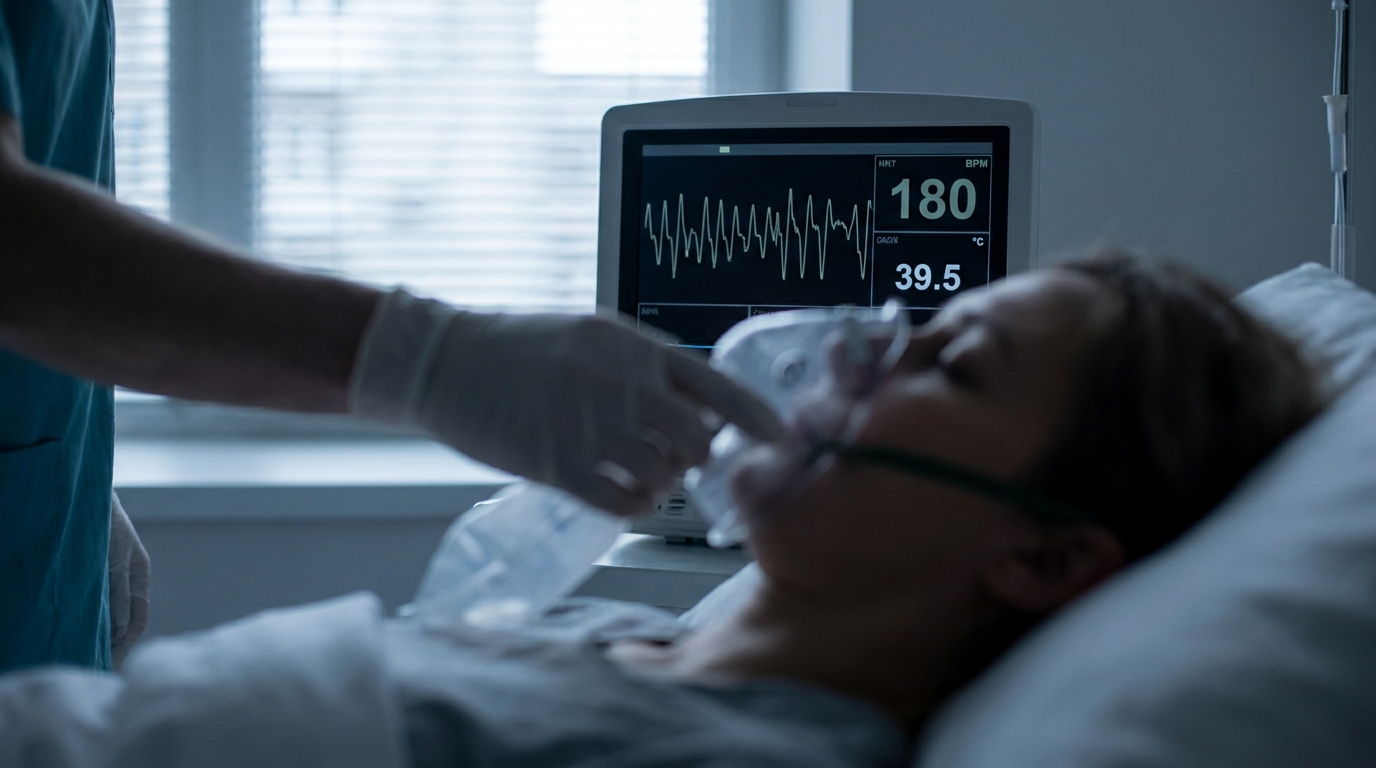
Thyroid storm – the most extreme manifestation of thyrotoxicosis – is one of those emergencies that is frequently recognized with delay due to its rarity and protean clinical presentation. Despite all therapeutic advances, mortality even with adequate treatment still ranges from 10–30%. Untreated, it is almost invariably fatal. Precisely because the diagnosis is primarily clinical and laboratory results are only available with delay, a structured approach is crucial. This article provides you with a practical overview of the pathophysiology, diagnosis using the Burch-Wartofsky Score, multimodal stepwise therapy, and the most important differential diagnoses.
Pathophysiology – Why Does Thyrotoxicosis Escalate?
Thyroid storm is not a distinct disease entity but rather the maximal decompensation of pre-existing hyperthyroidism. Serum concentrations of thyroid hormones T3 and T4 are not necessarily higher than in uncomplicated thyrotoxicosis. What matters is the interplay of several factors:
- Increased bioavailability of free hormones: Displacement from protein binding (e.g., in sepsis, after contrast media administration) causes a disproportionate rise in free T3/T4 concentrations.
- Catecholamine sensitization: Thyroid hormones increase the density and affinity of β-adrenergic receptors. The result is massive sympathoadrenergic overstimulation – even at normal catecholamine levels.
- Exhaustion of compensatory mechanisms: Hepatic clearance, peripheral deiodination, and cellular energy reserves reach their limits, initiating the vicious cycle of hypermetabolism, hyperthermia, and multi-organ failure.
Typical Triggers
In the majority of cases, a precipitating event can be identified. Clinically most relevant are:
- Discontinuation or irregular intake of antithyroid drugs
- Iodine exposure (contrast media, amiodarone, iodine-containing disinfectants)
- Thyroid surgery or radioiodine therapy without adequate preparation
- Infections and sepsis
- Surgical procedures, trauma, delivery
- Diabetic ketoacidosis, pulmonary embolism, cerebrovascular events
Clinical Presentation – The Diagnosis Is Clinical
The full-blown picture of thyroid storm affects virtually all organ systems. However, the clinical presentation can be remarkably heterogeneous, which complicates diagnosis particularly in elderly patients or in the apathetic form.
Cardinal Symptoms and Organ Manifestations
- Cardiovascular: Sinus tachycardia (>140/min), tachycardic atrial fibrillation, heart failure, hypotension progressing to cardiogenic shock. Atrial arrhythmias are present in over 50% of affected patients.
- Thermoregulation: Hyperthermia >40°C that barely responds to antipyretics. Body temperature correlates with the severity of the crisis.
- Central nervous system: Agitation, tremor, psychosis, delirium, seizures, coma. Neurological symptoms range from restlessness to coma and are highly prognostically relevant.
- Gastrointestinal: Nausea, vomiting, diarrhea, abdominal pain, jaundice. Hepatic dysfunction with elevated transaminases is a warning sign of unfavorable prognosis.
- Metabolic: Hyperglycemia, lactic acidosis, hypercalcemia.
The Apathetic Form
Particularly in elderly patients, thyroid storm can paradoxically present with lethargy, apathy, and absence of tachycardia. This so-called "apathetic thyroid storm" is frequently missed and misdiagnosed as sepsis or a cerebrovascular event. A high clinical index of suspicion is indispensable here.
Burch-Wartofsky Score – Quantifying the Diagnosis
Since laboratory values (fT3, fT4, TSH) do not reliably reflect the severity of the crisis and are only available with delay, the Burch-Wartofsky Score (BWS) was developed as a clinical scoring system. It allows a semiquantitative assessment of the probability of thyroid storm and should be calculated whenever clinical suspicion arises.
Scoring Parameters and Point Allocation
Thermoregulatory Dysfunction (Temperature):
- 37.2–37.7°C → 5 points
- 37.8–38.2°C → 10 points
- 38.3–38.8°C → 15 points
- 38.9–39.4°C → 20 points
- 39.4–39.9°C → 25 points
- ≥40.0°C → 30 points
Cardiovascular – Heart Rate:
- 100–109/min → 5 points
- 110–119/min → 10 points
- 120–129/min → 15 points
- 130–139/min → 20 points
- ≥140/min → 25 points
Cardiovascular – Heart Failure:
- Mild edema → 5 points
- Bibasilar rales → 10 points
- Pulmonary edema → 15 points
Cardiovascular – Atrial Fibrillation:
- Present → 10 points
Gastrointestinal-Hepatic Dysfunction:
- Moderate (diarrhea, nausea, vomiting, abdominal pain) → 10 points
- Severe (unexplained jaundice) → 20 points
Central Nervous System Dysfunction:
- Mild (agitation) → 10 points
- Moderate (delirium, psychosis, extreme lethargy) → 20 points
- Severe (seizures, coma) → 30 points
Precipitating Event:
- Identifiable → 10 points
Interpretation
- ≥45 points: Thyroid storm highly likely – immediate aggressive therapy
- 25–44 points: Impending storm – close monitoring and early initiation of therapy
- <25 points: Thyroid storm unlikely
Clinical Note: The BWS is a diagnostic aid, not an exclusion criterion. If clinical suspicion is high, therapy should be initiated even with a score <45. When in doubt: Treat first – the risks of withholding therapy far outweigh the risks of overtreatment.
Stepwise Therapy – Five Pillars of Management
The treatment of thyroid storm follows a multimodal approach with five therapeutic pillars. The sequence of interventions is not arbitrary – in particular, the temporal sequence between antithyroid drugs and iodine administration must be observed.
1. Inhibition of Hormone Synthesis – Antithyroid Drugs
Thionamides block thyroid peroxidase and thus the de novo synthesis of thyroid hormones. They have no effect on hormones already formed and stored.
- Methimazole (Thiamazole): Initial dose 40–80 mg p.o. or via nasogastric tube, followed by 20 mg every 6–8 hours. Standard in German-speaking countries.
- Propylthiouracil (PTU): Initial dose 600–1000 mg, then 200–250 mg every 4–6 hours. PTU has the additional advantage of inhibiting peripheral conversion of T4 to T3 and is therefore preferred by some experts in the acute crisis. Caution: hepatotoxicity.
Important: Antithyroid drugs must be administered at least one hour before iodine administration to prevent the administered iodine from serving as substrate for further hormone synthesis (Jod-Basedow effect).
2. Inhibition of Hormone Release – Iodine
High-dose iodine paradoxically blocks the release of thyroid hormones from the gland (Wolff-Chaikoff effect) and inhibits organification.
- Lugol's solution (5% iodine / 10% potassium iodide): 8–10 drops every 6–8 hours p.o.
- Sodium iodide: 500–1000 mg i.v. every 8–12 hours (if oral administration is not possible)
- Alternative in iodine allergy: Lithium carbonate 300 mg every 6–8 hours (also inhibits hormone release, requires level monitoring)
3. Blockade of Peripheral Hormone Effects – Beta-Blockers
Sympatholytic therapy addresses the catecholaminergic overstimulation and is often the first clinically effective intervention.
- Propranolol: 60–80 mg every 4–6 hours p.o. or 0.5–1 mg i.v. slowly (under monitoring), repeated as needed. Propranolol additionally inhibits peripheral T4-to-T3 conversion and is therefore the beta-blocker of choice.
- Esmolol: Continuous i.v. infusion (50–200 µg/kg/min) in hemodynamic instability or when a titratable therapy is required. Well titratable due to its ultra-short half-life.
- Caution: In severe heart failure or bronchospasm, beta-blockers should be used with caution. Consider switching to short-acting or cardioselective agents (esmolol) if necessary.
4. Inhibition of Peripheral Conversion and Anti-inflammatory Effect – Glucocorticoids
Corticosteroids serve a dual function in thyroid storm: they inhibit peripheral deiodination of T4 to T3 and address the frequently present relative adrenal insufficiency caused by the hypermetabolic state.
- Hydrocortisone: 100 mg i.v. bolus, followed by 100 mg every 8 hours
- Alternatively dexamethasone: 2 mg i.v. every 6 hours (stronger inhibitory effect on T4-to-T3 conversion)
5. Supportive Therapy
Supportive measures are essential and must not be neglected alongside specific therapy:
- Cooling: Physical cooling for hyperthermia. No aspirin/acetylsalicylic acid – ASA displaces thyroid hormones from protein binding and can worsen the crisis. Acetaminophen (paracetamol) is acceptable as an antipyretic, although its efficacy is limited.
- Fluid resuscitation: Aggressive fluid replacement – fluid requirements can be massively increased due to hyperthermia, diaphoresis, and tachypnea (3–5 liters/24 h).
- Glucose supplementation: Close blood glucose monitoring; glycogen reserves are frequently depleted.
- Trigger treatment: Identification and treatment of the precipitating event (antibiotics for infection, etc.).
- Intensive care monitoring: Continuous ECG, invasive blood pressure monitoring, central venous access, fluid balance monitoring.
Treatment-Refractory Cases
If there is no response to maximal medical therapy, the following escalation options are available:
- Plasmapheresis/Plasma exchange: Effective elimination of circulating thyroid hormones. Used as bridging to surgical intervention or in life-threatening decompensation.
- Emergency thyroidectomy: Subtotal or total thyroidectomy can be considered even in the acute setting and shows acceptable outcomes in specialized centers.
- Cholestyramine: 4 g every 6 hours p.o. – binds thyroid hormones in the enterohepatic circulation and can accelerate elimination as an adjunct.
Differential Diagnoses – What Else?
The symptom constellation of hyperthermia, tachycardia, altered mental status, and multi-organ dysfunction is not pathognomonic for thyroid storm. The following differential diagnoses must be systematically considered:
Sepsis and Septic Shock
The greatest differential diagnostic challenge. Sepsis can function both as a trigger for thyroid storm and as an independent condition that mimics the crisis. Procalcitonin, blood cultures, and the overall clinical picture help with differentiation – although both entities can coexist.
Malignant Hyperthermia
Typically perioperative following trigger exposure (volatile anesthetics, succinylcholine). Cardinal symptoms such as rigidity, hyperthermia, and rhabdomyolysis may initially appear similar. The history (anesthesia exposure) and massively elevated CK are diagnostic clues. Specific therapy: dantrolene.
Further Differential Diagnoses
- Pheochromocytoma/Paraganglioma: Paroxysmal hypertension, tachycardia, diaphoresis. Plasma/urinary catecholamines and metanephrines confirm the diagnosis.
- Neuroleptic malignant syndrome: History of neuroleptic exposure, rigidity, hyperthermia, autonomic instability, elevated CK.
- Serotonin syndrome: History of serotonergic medication, clonus (especially inducible), agitation, hyperthermia.
- Sympathomimetic intoxication: History, toxicology screening.
- Heat stroke: Environmental history, absence of diaphoresis in classic heat stroke.
Laboratory Diagnostics – What to Order, How to Interpret?
Although the diagnosis is made clinically, laboratory confirmation is essential:
- TSH: Suppressed (<0.01 mU/L) – however, a normal TSH does not reliably exclude the diagnosis in cases of central etiology.
- fT3 and fT4: Elevated, but the magnitude does not correlate with the severity of the crisis. Consider normal values in non-thyroidal illness syndrome.
- Additional laboratory values: Complete blood count, electrolytes, liver and renal function, CK, lactate, arterial blood gas, coagulation, blood cultures, procalcitonin, cortisol.
Practical Tip: Do not wait for laboratory results before initiating therapy. With a BWS ≥45, treat immediately. Laboratory values serve for confirmation and monitoring of the clinical course.
Prognosis and Clinical Course
Prognosis depends critically on the speed of diagnosis and initiation of therapy. Prognostically unfavorable factors include:
- Advanced age
- Altered mental status at the time of diagnosis (coma as the strongest predictor)
- Multi-organ failure, particularly hepatic dysfunction with jaundice
- Delayed diagnosis (>24 hours)
- Severe cardiac decompensation
With adequate therapy, clinical symptoms typically improve within 24–72 hours. However, normalization of thyroid function takes considerably longer, so consistent continuation of antithyroid therapy and planning of definitive treatment (surgery or radioiodine therapy) should already begin in the intensive care unit.
Practical Training
Thyroid storm is a rare but potentially lethal emergency where structured management determines the outcome. Clinical diagnosis, correct temporal sequencing of medication administration, and confident handling of differential diagnoses benefit enormously from practical training in realistic scenarios. In the Emergency Physician Refresher Course by Simulation Tirol, you can train exactly these rare emergency situations in a protected simulation environment and sharpen your clinical decision-making – so that in a real emergency, you act confidently and without delay.
More Articles
Recognizing Agonal Breathing: How to Correctly Interpret Gasping
Agonal breathing is frequently misinterpreted as normal breathing, delaying the start of resuscitation. This article explains its characteristics, how to differentiate it from physiological breathing, and the consequences for first responders and healthcare professionals.
Acute Dyspnea: Differential Diagnosis and Immediate Management
Dyspnea has numerous causes ranging from asthma to heart failure to pulmonary embolism. This article presents a systematic approach to differentiation based on history, clinical examination, auscultation, and point-of-care diagnostics.
Acute Hypoglycemia: Emergency Management in Adults and Children
Threshold values, symptom recognition, oral glucose vs. IV dextrose vs. glucagon – with separate dosing for adult and pediatric patients. A common emergency presentation systematically reviewed.