Cyanosis in Babies: How to Properly Assess Blue Lips
Parents notice blue lips or fingers in their infant and feel worried. This article explains the difference between harmless acrocyanosis and central cyanosis, lists warning signs of a true emergency, and describes when to call emergency services immediately.

Author: Dr. med. univ. Daniel Pehböck, DESA
Specialist in Anesthesiology and Intensive Care Medicine, AHA-certified ACLS/PALS Instructor, Course Director Simulation Tirol
Reading time approx. 9 min
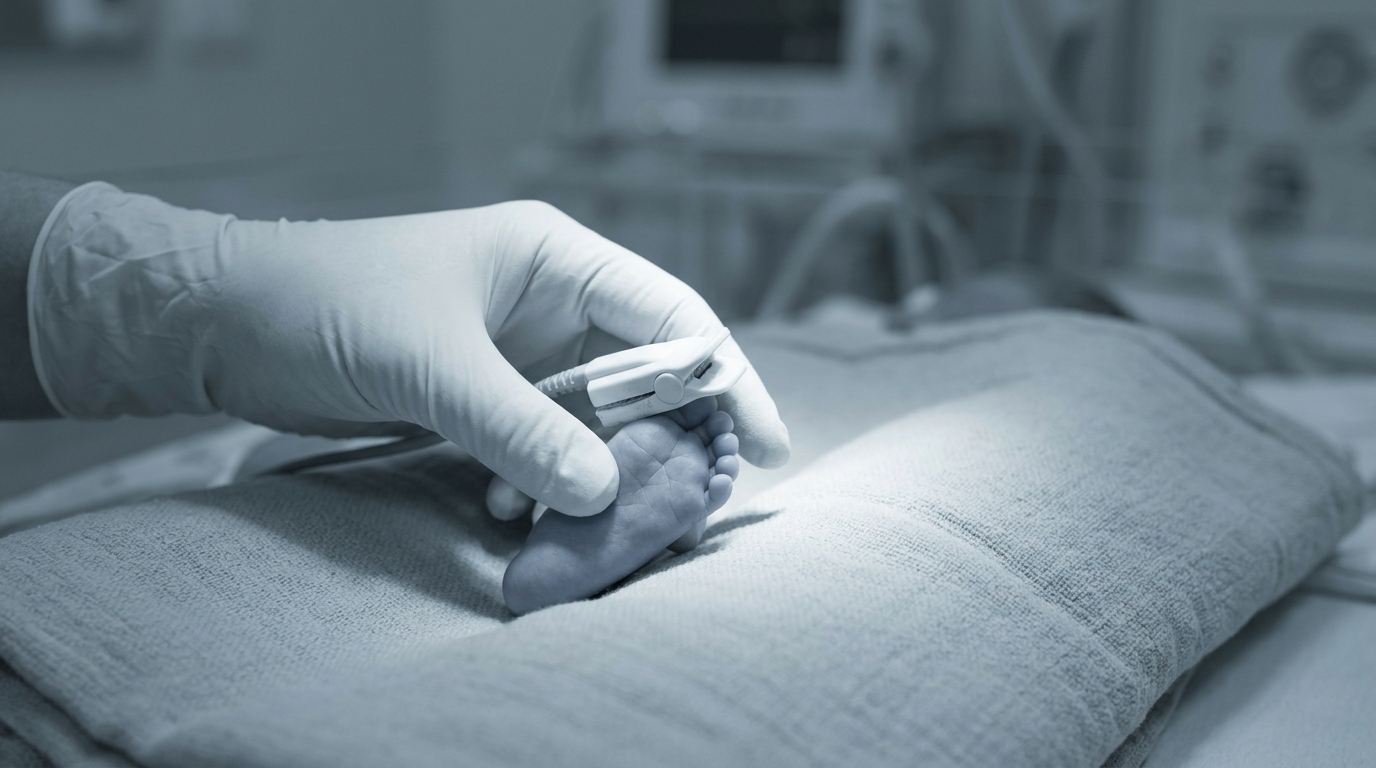
Blue lips or bluish discoloration of the fingers in a baby immediately triggers alarm for parents – and rightly so. Your instinct to look closely is an important protective mechanism for your child. At the same time, not every bluish discoloration automatically means an emergency. In many cases, the cause is harmless and resolves on its own. But there are situations where blue lips are an urgent warning sign and you need to act immediately. This article helps you recognize the difference, ask the right questions, and not lose any valuable time in a real emergency.
What Happens in the Body When the Skin Turns Blue?
The color of our skin and mucous membranes is closely related to how much oxygen is being transported in the blood. Blood that is rich in oxygen has a bright red color – which is why the lips, gums, and nail beds of healthy people look pink. When the blood contains less oxygen, it changes color to dark red or bluish. This bluish discoloration visible through the skin is called cyanosis.
In babies, such discoloration is particularly noticeable because their skin is often still very thin and light. However, not every blue discoloration means oxygen deprivation throughout the entire body. There are two fundamentally different forms of cyanosis, and this distinction is crucial for you as a parent.
Acrocyanosis: The Harmless Variant
The term acrocyanosis is composed of "acro" (referring to the outermost parts of the body) and "cyanosis" (blue discoloration). It refers to a bluish discoloration limited to the hands, feet, and sometimes the area around the mouth. The lips, tongue, and gums remain pink.
Why Does Acrocyanosis Occur?
Your baby's circulatory system is still immature in the first months of life. The small blood vessels in the hands and feet are particularly sensitive to temperature changes. When your baby gets a little cold – for example after bathing, during a diaper change, or in a cooler room – these tiny vessels constrict. Blood then flows more slowly through the outermost body regions and releases more oxygen along the way. The result: the skin on the hands and feet appears bluish or slightly purple, even though everything inside the body is perfectly fine.
Typical Features of Acrocyanosis
- Only the hands and feet are bluish, sometimes also the area directly around the mouth
- Lips, tongue, and gums are pink – this is the most important distinguishing feature
- The discoloration improves when you warm your baby, cuddle it close, or gently rub its hands and feet
- Your baby is alert, feeding normally, crying vigorously, and behaving normally overall
- Breathing is calm and regular
When Is Acrocyanosis Particularly Common?
Acrocyanosis occurs mainly in the first weeks of life and is so common in newborns that it is considered a normal finding. Many babies show it right after birth, even though they are completely healthy. But it can also occasionally occur in older infants – for example when the room temperature is a little lower or the baby has just been bathed.
Rule of thumb: If only the hands and feet are blue, but your baby seems alert, is feeding well, and has pink lips, everything is fine in the vast majority of cases. Warm your baby and observe whether the discoloration resolves within a few minutes.
Central Cyanosis: The Serious Warning Sign
The situation is very different with central cyanosis. Here, the lips, tongue, gums, and often the entire trunk are bluish in color. This means that the blood being pumped from the heart throughout the body contains too little oxygen. Central cyanosis is always a serious warning sign and requires immediate action.
How Do You Recognize Central Cyanosis?
- Lips and tongue are blue or gray-bluish in color
- The gums (or oral mucous membranes) are pale or bluish instead of pink
- Often the skin on the trunk, face, or the entire body is also discolored
- The discoloration does not improve when you warm your baby
- Your baby appears limp, lethargic, or unusually quiet
- Breathing may be abnormal: too fast, too slow, labored, or with unusual sounds
Possible Causes of Central Cyanosis
Central cyanosis can have various causes, all of which share one thing in common: the body is not getting enough oxygen. The most common reasons in infants are:
- Airway problems: A foreign body in the airway, severe bronchiolitis (inflammation of the smallest airways), or a croup attack can prevent your baby from getting enough air.
- Congenital heart defects: Some heart defects only become apparent days or weeks after birth, as the baby's circulation adjusts. Blue discoloration can then be the first noticeable sign.
- Pneumonia or other infections: Severe infections can impair lung function and lead to oxygen deprivation.
- Breathing pauses (apnea): Especially in premature babies, prolonged breathing pauses can occur that lead to temporary blue discoloration.
The Quick Check: Harmless or Emergency?
If you notice bluish discoloration in your baby, you can make an initial assessment in just a few steps. This check does not replace a visit to the doctor, but it helps you correctly gauge the urgency:
Step 1: Check Lips and Tongue
Gently open your baby's mouth and look at the inner side of the lips, the tongue, and the gums. Are they pink? Then it is most likely harmless acrocyanosis. Are they bluish, gray, or very pale? Then central cyanosis is likely present – call emergency services (144) immediately.
Step 2: Observe Breathing
Pay attention to your baby's breathing. Normal infant breathing is relatively fast (about 30 to 60 breaths per minute in newborns), but regular and without visible effort. Warning signs include:
- Nasal flaring: The nostrils visibly flare outward with each breath
- Retractions: The skin between the ribs, below the sternum, or at the neck visibly pulls inward with each breath
- Moaning or grunting during exhalation
- Very fast or very slow breathing
- Breathing pauses lasting more than a few seconds
Step 3: Assess General Condition
How is your baby behaving? A baby that is awake, crying vigorously or feeding, and responding to stimulation is giving you a good sign. A baby that is unusually limp, cannot be woken, refuses to feed, or appears lethargic needs immediate medical attention.
Step 4: Warmth Test
Hold your baby close, warm its hands and feet with your hands, or wrap it in a warm blanket. Harmless acrocyanosis typically improves within a few minutes. Central cyanosis does not respond to warmth.
When You Must Call Emergency Services (144) Immediately
Some situations cannot wait. Call emergency services at 144 immediately if one or more of the following signs are present:
- Lips, tongue, or gums are blue or gray
- Your baby is not breathing or has prolonged breathing pauses
- Breathing is clearly labored (with nasal flaring, retractions, grunting)
- Your baby is limp, barely responsive, or cannot be woken
- The skin across the entire body appears bluish or ashen gray
- Your baby has a fever and is also blue in color
- The discoloration appears suddenly and does not improve
While waiting for emergency services, you should position your baby safely: hold it upright or with the upper body slightly elevated to ease breathing. If your baby stops breathing, begin resuscitation immediately (5 initial rescue breaths, then alternating 15 chest compressions with 2 rescue breaths).
When You Should See a Pediatrician Soon
Not every discoloration is an emergency, but some situations should still be medically evaluated – even if they don't look acutely life-threatening:
- Acrocyanosis occurs very frequently, even in warm surroundings
- Your baby feeds less well than usual and appears bluish while doing so
- The discoloration recurs during every feeding
- Your baby sweats noticeably while feeding
- You notice bluish discoloration around the mouth that doesn't only occur in cold conditions
- You simply have a gut feeling that something is wrong – that is also a valid reason
Congenital heart defects in particular can gradually become noticeable in the first weeks of life. Bluish discoloration during feeding, combined with sweating and poor feeding, can be an early indicator. Pediatricians can quickly determine whether everything is fine with a simple examination (pulse oximetry – a painless measurement of the oxygen level in the blood at your baby's foot).
Special Situation: Blue Discoloration in Darker Skin Tones
In babies with darker skin tones, cyanosis can be more difficult to detect. The blue discoloration of the skin is less obvious. In this case, pay particular attention to:
- The color of the oral mucous membranes, tongue, and gums – these areas reliably indicate cyanosis regardless of skin color
- The color of the nail beds on fingers and toes
- The palms of the hands and soles of the feet, which are lighter even in darker-skinned individuals and show discoloration more readily
- The conjunctiva (the white of the eye), which can also appear bluish in cases of oxygen deprivation
Assessing the general condition – feeding behavior, alertness, breathing – is even more important here than in lighter-skinned babies.
Blue Lips Versus Blue Triangle Around the Mouth
A discoloration that often worries parents is the so-called perioral triangle – a bluish tinge in the area between the nose, mouth, and chin. This discoloration is common in newborns and young infants and is harmless in most cases, as long as the lips and tongue remain pink. It occurs because the skin in this area is particularly thin, allowing the underlying blood vessels to show through more prominently.
Important: The crucial difference lies in whether the lips themselves and the tongue are blue. If only the skin around the mouth appears bluish, but the mucous membranes inside the mouth are pink, this is generally not a sign of oxygen deprivation.
What You Can Do Preventively
- Room temperature: Keep your baby's sleeping area at a comfortable 18 to 21 degrees Celsius. Dress your baby appropriately for the temperature – the neck test helps: if the neck feels warm but not sweaty, your baby is dressed correctly.
- Smoke-free environment: Tobacco smoke significantly increases the risk of respiratory illnesses in infants and can lead to breathing problems that promote cyanosis.
- Attend routine check-ups: During the regular Mutter-Kind-Pass examinations, your baby's heart and lungs are checked among other things. Make sure to attend these appointments reliably.
- Trust your instincts: You know your baby best. If something strikes you as "not right," calling your pediatrician is always the right thing to do – even if the concern turns out to be unfounded.
Key Points at a Glance
| Acrocyanosis (usually harmless) | Central Cyanosis (emergency) | |
|---|---|---|
| What is blue? | Only hands and feet | Lips, tongue, gums, possibly the entire body |
| Lips and tongue | Pink | Blue or gray |
| General condition | Baby appears alert, feeds normally | Baby is limp, feeds poorly, or barely responds |
| Breathing | Normal | Labored, abnormally fast/slow, or absent |
| Response to warmth | Improves | No improvement |
| What to do? | Warm the baby, observe | Call emergency services 144 immediately |
Practical Training
Recognizing blue lips, correctly assessing breathing, and being able to act without hesitation in an emergency – this gives you as a parent, grandparent, or caregiver a confidence that no article alone can provide. In the baby resuscitation course from Simulation Tirol, you practice on realistic training manikins how to recognize respiratory arrest, perform resuscitation, and care for your baby until emergency services arrive. The courses are specifically designed for laypeople – you don't need any prior medical knowledge. Just a few hours of practical training can make all the difference when it matters most.
Want to practice this hands-on?
In our Baby-Reanimationskurs you practice this topic hands-on with high-tech simulators and experienced instructors.
More Articles
Respiratory Distress Syndrome in Newborns: Causes and Initial Management
Transient tachypnea, meconium aspiration, and surfactant deficiency – how healthcare professionals and parents can distinguish the most common causes of neonatal respiratory distress and which immediate measures can be lifesaving.
Airway Obstruction in Infants: Back Blows and Chest Thrusts
Detailed lay-rescuer guide for choking emergencies in babies under 1 year: positioning, blow technique, alternating measures, and when to call emergency services.
Baby Not Breathing: Infant CPR for Laypeople
A clear, easy-to-understand guide to cardiopulmonary resuscitation (CPR) for babies under one year of age. This article explains how to check breathing, perform rescue breaths, and give chest compressions with the correct hand position – specifically designed for parents and grandparents with no medical background.